

close
Choose Your Site
Global
Social Media


Can you charge lithium batteries in cold weather? This is a common question for anyone using modern energy storage systems, from solar setups to portable devices. While lithium battery technology is known for efficiency, cold temperatures can significantly impact performance, safety, and lifespan. In this guide, we’ll explore how cold weather affects lithium batteries, why charging in low temperatures can be risky, and what best practices can help you protect your battery and maintain optimal performance in any environment.
Cold temperatures slow down the internal chemical processes. That’s the core issue. Everything inside the battery starts to move more slowly.
Key effects include:
Slower ion movement
Lithium ions travel between electrodes. In cold weather, they move sluggishly. This limits how fast energy flows.
Increased internal resistance
The battery “fights” itself more. More resistance means less efficient energy transfer.
Reduced available capacity and output
The battery cannot deliver its full power. It may seem drained faster than usual.
Think of it like traffic in winter. Everything slows down. Energy gets stuck in the system.
| Condition | Warm Weather | Cold Weather |
|---|---|---|
| Ion Movement | Fast | Slow |
| Internal Resistance | Low | High |
| Energy Output | Strong | Reduced |
| Efficiency | High | Lower |
It’s not just speed. The chemistry itself changes. That affects how energy is stored and released.
Here’s what happens inside:
Electrolyte thickening
The liquid inside the battery becomes more viscous. It doesn’t flow easily. This slows down ion movement even more.
Reduced electrochemical reactions
Chemical reactions become weaker. Less energy is produced per cycle.
Energy demand vs. output imbalance
Devices still demand power. The battery struggles to keep up.
Result: quicker drain and weaker performance.
| Factor | What Happens | Result |
|---|---|---|
| Electrolyte | Becomes thicker | Slower internal movement |
| Chemical reactions | Slow down | Less energy generated |
| Energy demand vs. output | Out of balance | Faster battery drain |
Cold weather doesn’t break the battery. It just makes it work harder to deliver less.
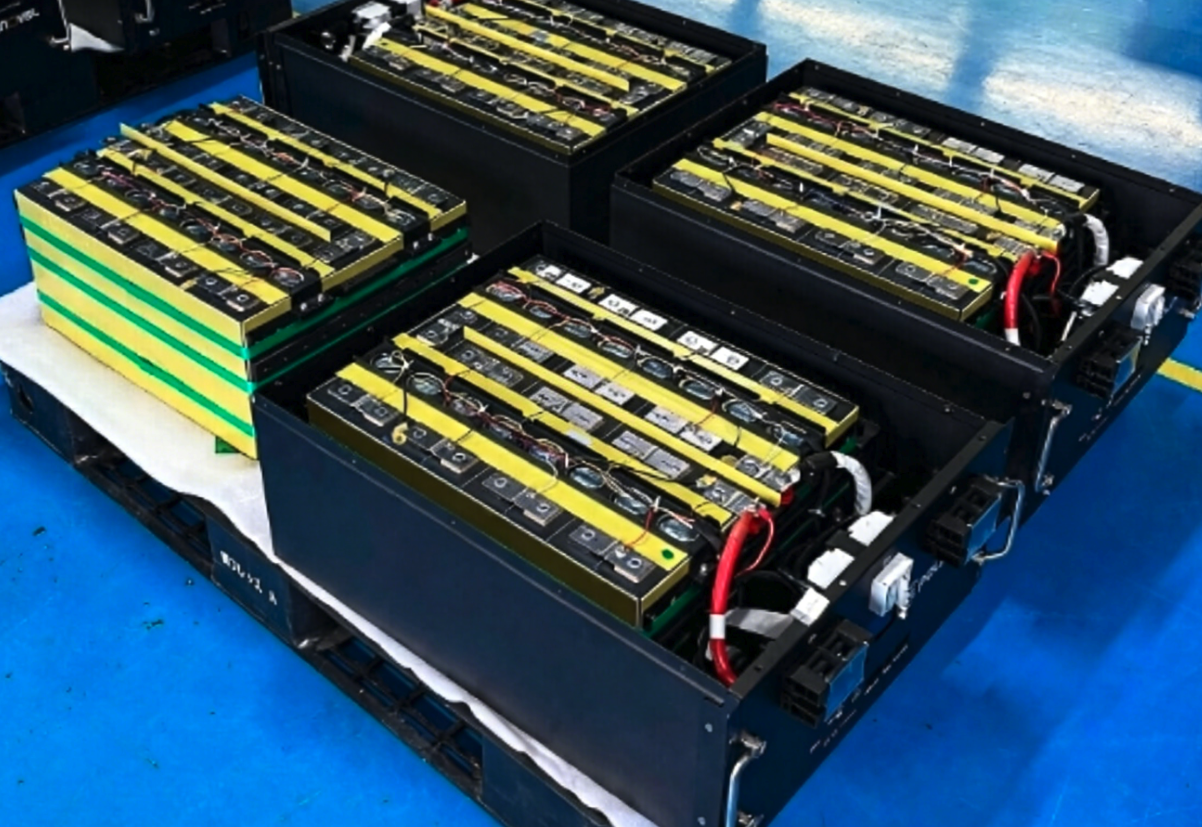
When a lithium battery is too cold, something dangerous can happen inside it. This is called lithium plating. It occurs when lithium ions cannot move properly. Instead of flowing between electrodes, they begin to deposit as metallic lithium on the battery surface. It’s not what we want.
Why does it happen?
Cold temperatures slow ion movement
Charging forces energy into the battery
The reaction becomes unstable
In simple terms: The battery gets confused. Ions stop moving correctly. They “pile up” in the wrong place.
How it damages battery cells:
Forms metallic buildup inside the battery
Reduces efficiency and energy storage
Increases internal resistance
Can create dendrites (sharp structures)
These dendrites can grow over time. If they touch the opposite electrode, they may cause a short circuit.
| Cause | What Happens Inside | Result |
|---|---|---|
| Low temperature | Slower ion movement | Poor energy transfer |
| Charging in cold | Unstable reactions | Lithium plating forms |
| Continued stress | Metal buildup grows | Possible short circuit risk |
Cold charging doesn’t just affect one cycle. It leaves lasting damage. Once lithium plating begins, the battery starts losing usable capacity. It cannot store as much energy as before.
What this means:
Less usable power each cycle
Faster drop in battery performance
Shorter overall lifespan
Think of it like this: Each bad charge takes a small piece away. Over time, it adds up.
Impact on cycles and lifespan:
Lithium batteries are rated for thousands of cycles
Cold damage reduces that number
More frequent replacements may be needed
| Condition | Battery Health Impact |
|---|---|
| Proper charging | Full cycle life |
| Occasional cold charge | Slight degradation |
| Frequent cold charging | Major capacity loss |
Cold charging can also lead to safety problems. These risks grow when the battery is pushed too hard in low temperatures.
Key dangers include:
Overheating after charging begins
The battery may heat unevenly. Stress builds inside.
Internal short circuits
Lithium plating creates conductive paths. It can trigger a short.
Potential swelling or failure
Gas may build up. The battery can expand or deform.
| Risk Type | What Happens | Possible Outcome |
|---|---|---|
| Overheating | Internal stress rises | Reduced stability |
| Short circuit | Metal pathways form | Sudden failure |
| Swelling / expansion | Gas builds inside | Physical damage |
Cold charging may seem small at first. But inside the battery, it tells a different story.
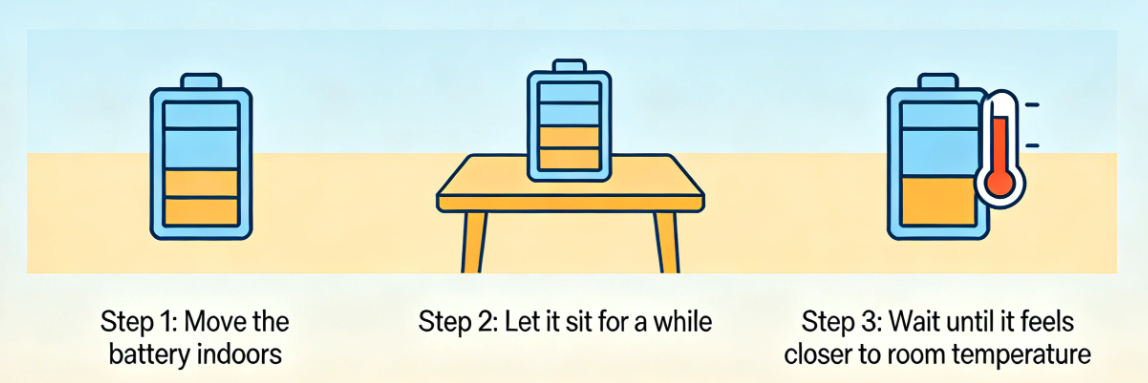
Cold batteries don’t like being charged. So give them time. Before charging, let the battery reach room temperature. This helps stabilize the internal chemistry and reduces stress.
How to do it:
Move the battery indoors
Let it sit for a while
Wait until it feels closer to room temperature
Avoid rushing. Time helps here.
Natural warming vs. artificial heating:
| Method | Description | Safety Level |
|---|---|---|
| Natural warming | Let it warm slowly in a room | Safe |
| Artificial heating | Using external heat sources | Risky |
Natural warming is the safest approach. Artificial heat can damage cells if it’s uneven or too intense.
Not all chargers are the same, and smart chargers are designed to protect your battery during the charging process. They often come equipped with temperature sensors, automatic current control, and built-in safety systems. These features allow the charger to adjust how it delivers power based on the battery’s condition at any given moment.
This is important because it helps prevent overcharging, reduces the risk of overheating, and ultimately protects the overall lifespan of the battery. Think of it like a safety net—it steps in and reacts whenever conditions start to change.
Fast charging sounds great. But in the cold, it can be risky. Cold batteries can’t handle high current well. When you push energy in too quickly, stress builds inside.
Why slow charging is better:
Gives ions more time to move
Reduces internal resistance stress
Lowers heat buildup
| Charging Type | Cold Weather Impact | Battery Health |
|---|---|---|
| Fast charging | High stress | Higher risk |
| Slow charging | Lower stress | Safer |
Where you charge matters just as much as how you charge. Keep batteries in a stable, warm, and dry environment when charging.
Best options include:
Indoor spaces
Temperature-controlled rooms
Insulated storage areas
This helps in several important ways. It reduces the risk of condensation forming on or inside the battery, which can lead to damage over time. It also helps maintain a steady and stable temperature during charging, so the battery doesn’t experience sudden changes. At the same time, it improves overall charging efficiency, allowing the battery to charge more effectively. Cold garages or outdoor spaces are not ideal because they expose the battery to unstable conditions. A calm and controlled environment supports a healthier charge, and it helps keep your battery performing better over time.
Understanding how to handle lithium batteries in cold weather can make a big difference in performance, safety, and long-term value. By following proper charging habits and temperature control, you can avoid common issues like lithium plating and capacity loss.
If you’re looking for reliable energy storage solutions built for real-world conditions, Shenzhen Polinovel Tech Co., Ltd offers advanced lithium battery systems designed with safety, durability, and efficiency in mind. Ready to optimize your energy system? Start with smarter battery care today and ensure lasting performance in every season.
A: No, charging below 0°C can cause lithium plating, damaging the battery and reducing lifespan.
A: Generally below 0°C (32°F). Performance drops significantly, and charging becomes unsafe.
A: Let it warm naturally to room temperature indoors. Avoid direct heat or rapid warming methods.
A: Yes, lithium batteries perform better, offering higher efficiency, faster charging, and longer lifespan.
A: They can last many years, but cold reduces performance and may shorten lifespan if misused.