

close
Choose Your Site
Global
Social Media


Choosing a reliable LiFePO4 battery manufacturer for OEM projects is key to building safe, efficient, and long-lasting power systems. This guide shows you how to evaluate a LiFePO4 battery manufacturer step by step. You’ll learn what matters most, from application needs to technical specs and production strength. Whether it’s solar storage, EVs, or industrial use, the right partner makes a real difference.
Before choosing a LiFePO4 battery manufacturer, we need to define the real application. This step shapes every technical decision later. Different OEM projects demand different performance levels, safety standards, and design flexibility. Think about where the battery will be used. It directly affects configuration, capacity, and lifespan.
Common OEM application categories:
| Application Type | Typical Needs | Key Focus |
|---|---|---|
| Residential ESS | Stable output, long cycle life | Safety, efficiency |
| Industrial systems | High load, continuous operation | Durability, power output |
| Commercial storage | Peak shaving, backup power | Scalability, reliability |
Typical use cases include:
Energy storage systems (ESS) for homes or businesses
Electric vehicles like golf carts, forklifts, AGVs
Solar and renewable energy systems
Backup power for telecom and data centers
Each use case comes with unique demands. A forklift battery, for example, needs high discharge rates. A home ESS values long cycle life.
Match specs to real-world usage
We should always connect specs to actual operating conditions.
Daily cycling? → Choose high cycle life
High load spikes? → Check C-rate carefully
Outdoor use? → Focus on temperature tolerance
Space-limited design? → Optimize energy density
A mismatch here leads to poor performance or early failure.
Now we move deeper into technical details. These parameters define how the battery performs in real environments.
LiFePO4 batteries come in different voltage configurations. Common choices include:
12V
24V
48V / 51.2V
High-voltage systems (for large ESS or industrial setups)
Higher voltage often means better efficiency. It also reduces current load.
Capacity tells us how much energy the battery stores.
Ampere-hour (Ah): Measures charge capacity
Kilowatt-hour (kWh): Reflects total usable energy
Example comparison:
| Capacity | Typical Application |
|---|---|
| 100Ah | Small solar systems, backup power |
| 200Ah–300Ah | Residential ESS |
| 10kWh+ | Commercial or industrial systems |
More capacity means longer runtime. But it also increases size and cost.
DoD defines how much energy we can safely use.
Higher DoD = more usable energy
LiFePO4 usually allows 80%–100% DoD
Example:
100Ah battery
80% DoD → usable 80Ah
A deeper discharge improves efficiency, but it should match manufacturer design limits.
Cycle life shows how long the battery lasts over time.
Typical range: 4000+ cycles
Some premium cells exceed this
Longer cycle life = lower replacement cost over time.
C-rate tells how fast a battery charges or discharges.
1C → full charge/discharge in 1 hour
0.5C → slower, safer operation
2C or higher → high power applications
Quick reference:
| C-Rate | Use Case |
|---|---|
| 0.2C–0.5C | Solar storage, steady load |
| 1C | General purpose systems |
| 2C+ | EVs, high-performance equipment |
Higher C-rate means more power delivery. It also increases stress on cells.
Batteries behave differently under temperature changes.
Ideal operating range: 0°C to 45°C
Charging below 0°C can damage cells
High heat reduces lifespan
Important considerations:
Outdoor installations need thermal protection
Cold climates require heating systems
Industrial use may need rugged battery enclosures
Temperature control is not optional. It directly impacts safety and performance. By aligning these parameters with your OEM project requirements, you create a solid foundation before engaging any manufacturer.
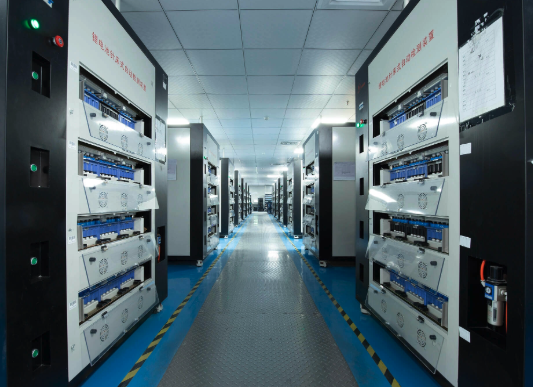
When we evaluate a LiFePO4 battery manufacturer, production strength comes first. It tells us how reliable they are when orders grow fast. OEM projects demand consistency, not just one-time performance. Take a look at the manufacturing setup. A strong partner usually integrates design, development, and production under one roof.
At Shenzhen Polinovel Tech Co., Ltd, for example, the entire process is handled in-house. It combines design, development, and manufacturing. This structure helps maintain tighter control over quality.
In-house production vs outsourced assembly
A fully integrated factory is always more stable.
In-house systems
Better quality control
Faster feedback loop
Stable long-term supply
Outsourced assembly
Higher variation risk
Limited control over quality
Possible delays in delivery
We should always lean toward a manufacturer that controls core processes.
Production capacity and scalability
OEM projects grow. So should the supplier.
Ask yourself:
Can they scale quickly?
Can they support large batch orders?
Do they have long-term production capacity?
Polinovel, with over 15 years of experience, supports scalable lithium battery solutions. It serves applications like solar systems, forklifts, and AGVs. That kind of flexibility matters.
Automated processes in manufacturing
Automation improves precision and reduces risk.
Key automated processes include:
Laser welding for strong internal connections
Cell grading for performance balance
Automated testing systems
Standardized assembly lines
| Process | Benefit |
|---|---|
| Laser welding | Clean and precise connections |
| Cell grading | Balanced performance |
| Automated testing | Early defect detection |
| Assembly systems | Consistent quality output |
Quality at scale
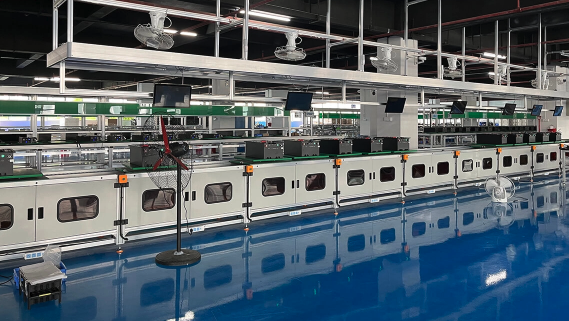
Small batches are easy to manage, but large-scale production is where true capability shows. Consistency becomes the real challenge, and it must be controlled at every step. A strong manufacturer ensures 100% cell inspection, along with strict testing procedures before assembly begins. It checks every component carefully, not just the final product. This approach helps identify issues early and keeps risks low.
Stable output across all batches is equally important. Each battery should perform the same, whether it is the first unit or the thousandth. That level of consistency builds trust and supports long-term OEM projects. At Shenzhen Polinovel Tech Co., Ltd, quality control runs through the entire process. It starts with cell selection and continues through testing, assembly, and final inspection. This structured system ensures every battery delivers reliable performance, batch after batch.
OEM success depends on engineering capability. It’s not just about making batteries. It’s about designing solutions.
Custom OEM/ODM capabilities
A strong partner should adapt to your project.
Polinovel provides:
OEM and ODM services
Custom battery design
Flexible product development
They support different applications, from RV systems to industrial equipment.
BMS design and firmware development
The Battery Management System controls everything inside the battery.
A capable manufacturer should offer:
Custom BMS development
Firmware tuning
Smart monitoring features
Polinovel integrates features like Bluetooth monitoring. It allows real-time system visibility. That adds value to end users.
Mechanical and thermal design expertise
Battery design must handle real-world stress.
Key design elements include:
Heat management
Structural strength
Compact layout
Safety protection
Polinovel also offers self-heating low-temperature solutions. It improves performance in cold environments. That’s important for outdoor and marine applications.
Application-specific solutions
Different industries need different designs.
Golf carts → lightweight, efficient
Marine → water-resistant, stable output
Solar systems → long cycle life
Forklifts → high discharge performance
Polinovel serves all these sectors. It shows strong application understanding.
Innovation in system design
Modern OEM projects require flexible systems.
| System Type | Advantage |
|---|---|
| High-voltage batteries | Better efficiency |
| Modular systems | Easy expansion |
| Multi-voltage options | Wide compatibility |
Polinovel provides a wide range of voltage options:
12V
24V
36V
48V
72V
Polinovel applies strict testing and quality tracking. It ensures every battery meets standards before shipment. Reliable manufacturers don’t just sell batteries. They build long-term energy solutions. At Polinovel, the focus stays on safety, performance, and sustainability across every product and project.
A good LiFePO4 battery manufacturer should offer strong quality control, solid R&D, and consistent production. These factors directly impact your project’s success. Always match your application with the right specs and capabilities.
Look for a partner who understands your needs and can scale with your business. With full OEM support and strict quality standards, Shenzhen Polinovel Tech Co., Ltd provides reliable battery solutions you can trust.
Choosing the right manufacturer ensures consistent quality, stable supply, and technical support. It helps reduce risks and ensures the battery performs reliably in real-world applications.
The BMS is essential because it protects the battery and manages its performance. It controls charging, discharging, temperature, and cell balancing to ensure safety and efficiency.
Grade A cells are high-quality lithium cells that provide stable performance, longer lifespan, and better safety. They are preferred for OEM projects because they reduce failure risks.
Cycle life refers to the number of charge and discharge cycles a battery can complete. A higher cycle life means longer service life and lower replacement costs.
LiFePO4 batteries are used in solar energy systems, electric vehicles, marine systems, RVs, forklifts, and telecom backup systems. They are suitable for both residential and industrial use.