

close
Choose Your Site
Global
Social Media


The energy storage sector faces continuous supply chain volatility. Lithium carbonate availability fluctuates wildly across global markets. Global demand for stationary and low-speed energy storage continues to escalate rapidly. Engineering teams urgently need viable, scalable alternative chemistries. Materials for the Sodium-ion Battery are projected to see a 6.1% annual growth rate from 2026 to 2033. This growth validates the transition from laboratory research to commercial viability. You face the challenge of balancing energy density against supply chain security and thermal runaway risks. Selecting battery technologies for 2026 product cycles requires strict evaluation of these operational realities. We do not position sodium-ion technology as a universal lithium replacement. Instead, it serves as a highly specialized, mature alternative. It excels in specific use cases where safety, regional climate extremes, and wide temperature tolerance outweigh the need for maximum gravimetric energy density.
Cost and Resource Abundance: Sodium-ion batteries eliminate reliance on critical minerals like lithium, cobalt, and copper, utilizing globally abundant sodium resources to offer a projected 20-30% reduction in cell-level costs at scale by 2026.
Optimal Deployment Zones: The highest-ROI sodium-ion battery applications center on grid storage, telecommunications backup, and low-speed electric vehicles (LSEVs), particularly in regions with extreme climates or vulnerable supply chains.
Performance Trade-offs: While offering superior cold-weather performance (retaining up to 90% capacity at -20°C) and enhanced safety, sodium-ion currently yields lower energy density (140-160 Wh/kg) compared to LFP (Lithium Iron Phosphate).
Supply Chain Readiness: 2026 marks the transition from pilot manufacturing to commercial gigawatt-hour (GWh) scale, requiring buyers to rigorously vet supplier quality control, manufacturing steps, and production scalability.
Table of Contents
Choosing the right energy storage battery requires evaluating operating conditions, safety, cost, and long-term performance. Emerging technologies such as sodium-ion batteries offer alternatives to conventional lithium-ion systems, particularly for cold climates and large-scale energy storage applications.
Evaluation Factor | What to Consider |
|---|---|
Operating Temperature | Performance in extreme cold or heat |
Safety | Thermal stability and protection requirements |
Energy Density | Storage capacity relative to weight and size |
Cycle Life | Long-term durability and capacity retention |
Cost | Initial investment and lifetime operating costs |
Supply Chain | Raw material availability and sourcing stability |
Typical performance ranges for current sodium-ion technology vary by cell chemistry and manufacturer.
Specification | Indicative Range |
|---|---|
Energy Density | 100–160 Wh/kg |
Cycle Life | 2,000–5,000+ cycles |
Low-Temperature Performance | Some designs support discharge at -20°C or below |
Main Applications | Stationary ESS, backup power, short-range mobility |
Figures are indicative, not universal specifications. Verify the manufacturer's test conditions, certifications, and cell datasheets.
Both technologies offer advantages, but their suitability depends on project requirements.
Comparison | Sodium-Ion | LFP |
|---|---|---|
Energy Density | Generally lower | Higher |
Cold-Weather Performance | Advantage in some designs | More limited, especially for charging |
Cycle Life | Varies; less field history | Proven long cycle life |
Safety | Chemistry-dependent | Established thermal stability |
Cost | Potential future savings | Currently more competitive at scale |
Supply Chain | Less reliance on lithium | Mature global ecosystem |
The International Energy Agency reports that sodium-ion batteries are increasingly competitive in cold-climate applications, while LFP retains advantages in manufacturing maturity, energy density, and cost.
Choose Sodium-Ion for projects prioritizing low-temperature performance, raw material diversification, or emerging energy storage applications.
Choose LFP for projects requiring proven reliability, higher energy density, established suppliers, and predictable lifecycle costs.
Key Takeaway: Sodium-ion is a promising alternative for specialized energy storage environments, while LFP remains the more established solution for most commercial deployments in 2026.
Identifying the best Sodium-ion Battery Applications requires matching cell characteristics to operational demands. The technology excels where physical space is abundant and safety is paramount. Engineers must look beyond simple energy density metrics to understand the true operational value of these systems.
Sodium-ion batteries are promising for grid-scale energy storage and peak shaving, where cost, scalability, and reliability matter more than energy density. They can store excess renewable energy and discharge it during peak demand. Their abundant raw materials and potential thermal safety advantages make them attractive for large installations, although cooling and fire protection requirements depend on the specific battery system.
Sodium-ion batteries offer potential advantages for telecom backup and UPS systems, including cold-weather performance, high-power discharge capability, and reduced maintenance compared with lead-acid batteries. They are suitable for consideration in remote base stations and emergency power applications, provided the selected cells meet the required discharge rates, service life, and reliability specifications.
Sodium-ion batteries are emerging alternatives for electric scooters, e-bikes, and low-speed vehicles. Their potential benefits include affordable materials, cold-weather performance, and fast-charging capability in suitable cell designs. Although their energy density is generally lower than lithium-ion batteries, they can meet the requirements of short-distance urban transportation and delivery fleets.
Sodium-ion batteries offer potential benefits for forklifts and warehouse equipment through opportunity charging, reduced routine maintenance, and reliable power delivery. Their lower energy density may be acceptable in applications where battery weight contributes to vehicle counterbalance. However, battery weight, dimensions, charging performance, and compatibility must match the equipment manufacturer's requirements.
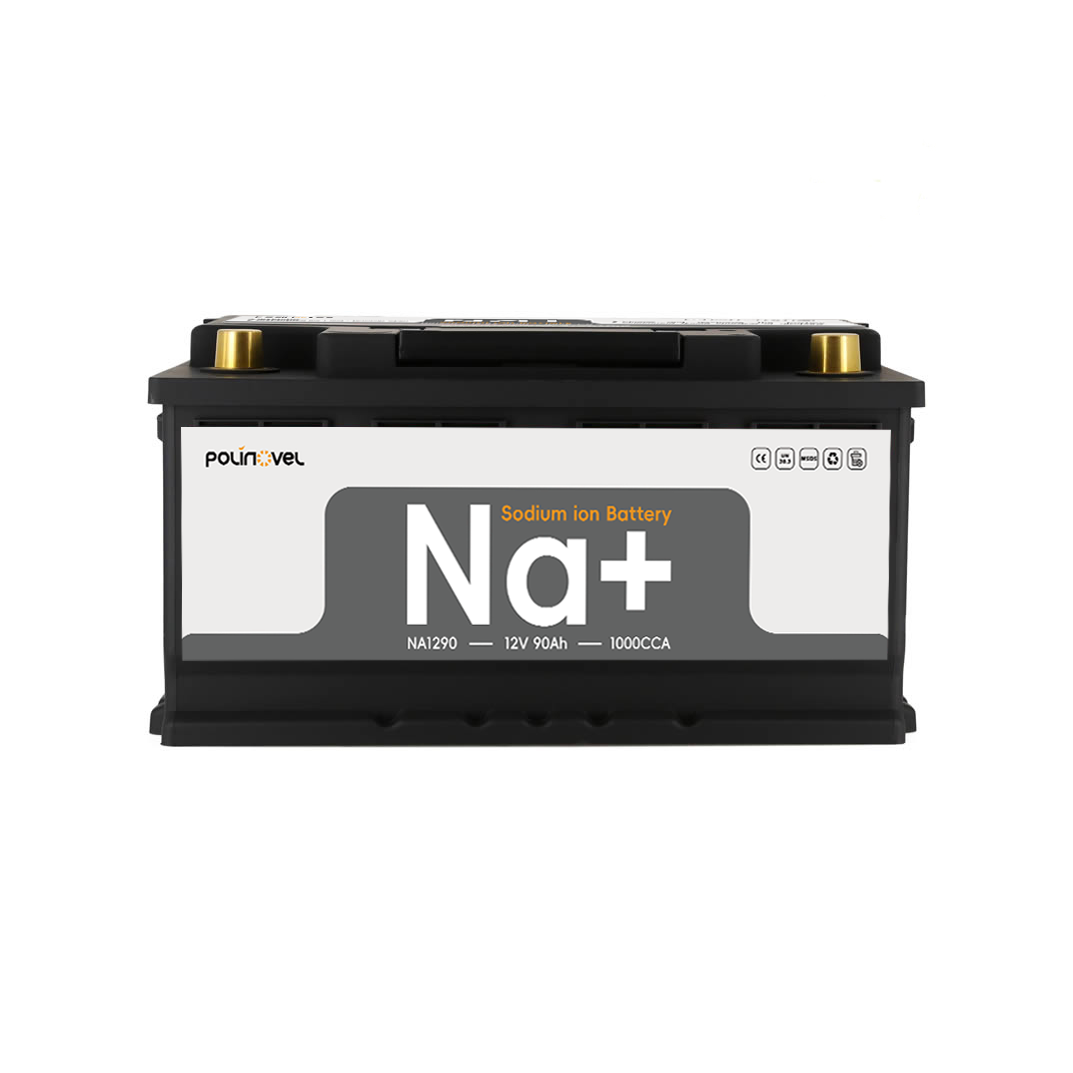
Sodium-ion batteries are being explored for automotive 12V and 48V auxiliary and start-stop systems due to their power capability and potential low-temperature performance. They may offer longer cycle life and reduced maintenance compared with conventional lead-acid batteries. However, replacement requires verification of voltage compatibility, cold-cranking performance, charging systems, and automotive safety standards.
Sodium-ion home batteries are emerging alternatives to established LFP storage systems, particularly for homeowners seeking cold-weather performance and diversified battery materials. They offer potential safety and cost advantages, although energy density, system availability, and long-term performance vary by manufacturer. Proper certification, thermal management, and inverter compatibility remain essential for residential installations.
Despite its rapid advancement, sodium-ion is not a universal solution. Physics and chemistry dictate hard limits on its current capabilities. Understanding these limitations prevents costly engineering mistakes during product development. Certain industries require energy densities that sodium simply cannot provide.
Sodium-ion batteries currently have lower energy density than NMC and other high-energy lithium-ion batteries, limiting their suitability for long-range passenger EVs. Their greater weight and space requirements can reduce driving range and vehicle efficiency. Sodium-ion technology is better suited to affordable, short-range electric vehicles, while higher-energy lithium chemistries remain preferable for long-distance applications.
Sodium-ion batteries face limitations in smartphones, laptops, and wearable devices due to their relatively low volumetric energy density. These products require compact, lightweight batteries with long operating times. Lithium-ion batteries remain the preferred choice for most portable electronics, while sodium-ion technology may become more competitive as energy density improves.
Aerospace and eVTOL applications demand lightweight batteries with high energy density and power output. Current sodium-ion batteries generally cannot match the weight efficiency of advanced lithium-ion technologies, limiting their suitability for electric aircraft. Higher-energy lithium-based and emerging battery chemistries remain more promising for weight-sensitive aviation applications.
Sodium-ion batteries offer potential advantages in raw material availability, manufacturing flexibility, and supply chain diversification. However, their long-term competitiveness depends on production scale, cell durability, manufacturing costs, and overall lifecycle performance.
Sodium-ion batteries use abundant sodium resources and can employ aluminum current collectors on both electrodes, reducing reliance on copper and lithium. Many sodium-ion formulations also avoid cobalt and nickel, offering potential material cost and sourcing advantages. Actual savings depend on cathode chemistry, raw material prices, and manufacturing efficiency.
Sodium-ion battery manufacturing shares major production processes with lithium-ion technology, including slurry mixing, electrode coating, calendaring, and cell assembly. Existing lithium-ion production lines can often be adapted, reducing equipment investment. However, changes to materials, process settings, electrolyte handling, and quality control are still necessary for reliable large-scale production.
Manufacturing Process | Lithium-ion Requirement | Sodium-ion Requirement |
|---|---|---|
Slurry Mixing | Standard NMP/Water solvents | Identical equipment used |
Electrode Coating | Copper (Anode), Aluminum (Cathode) | Aluminum (Anode), Aluminum (Cathode) |
Drying & Calendering | Strict moisture control required | Lower moisture sensitivity |
Cell Assembly | Standard winding/stacking | Identical equipment used |
Evaluating a 10-year deployment requires modeling the expected lifecycle performance accurately. Degradation rates remain highly stable under standard operating conditions. The cells do not suffer from the same severe capacity fade at extreme states of charge. You can routinely charge a sodium-ion cell to 100% without accelerating degradation.
End-of-life recycling potential adds significant long-term value to the ecosystem. The materials are easier to process than complex lithium-cobalt-nickel mixtures. Extracting aluminum and sodium from spent cells requires less aggressive chemical processes. This simplifies the reverse logistics and reduces the environmental impact of disposal. A robust recycling ecosystem will develop quickly alongside commercial deployment.
Initiate small-scale pilot programs immediately to validate operational performance in your specific environment.
Request commercial cell samples from top-tier manufacturers to conduct internal benchmarking and teardowns.
Conduct dedicated BMS integration testing and firmware recalibration to match sodium voltage curves.
Audit supplier production lines in person to verify their true gigawatt-hour manufacturing scalability.
A: The primary difference lies in the charge carriers and material abundance. Sodium ions are larger and heavier than lithium ions, resulting in lower energy density. However, sodium is globally abundant and inexpensive to extract. This makes sodium-ion cells highly resource-efficient, utilizing aluminum instead of copper, though they are bulkier than their lithium counterparts.
A: It depends on your priorities. Sodium-ion offers superior cold-weather performance and a slightly better safety profile regarding thermal runaway. However, LFP currently provides higher energy density, meaning a sodium-ion system will require a larger physical footprint to store the exact same amount of energy.
A: Yes, but primarily in low-speed electric vehicles (LSEVs) and two-wheelers. Their lower energy density restricts them from powering long-range passenger EVs, which require 300+ miles of range. Despite rapid improvements in EV material markets, NMC and advanced LFP remain the standard for highway-capable vehicles.
A: Regions experiencing extreme cold climates benefit immensely, as sodium-ion retains up to 90% capacity at -20°C. Additionally, regions seeking energy independence and looking to decouple from vulnerable lithium and copper supply chains find sodium-ion highly advantageous for local grid storage.
A: Commercial sodium-ion cells expected in 2026 typically offer a cycle life between 3,000 and 5,000 cycles. While this is slightly lower than premium LFP cells, it is more than sufficient for daily cycling in grid storage, telecom backup, and micro-mobility applications over a 10-year lifespan.