

close
Choose Your Site
Global
Social Media


Marine vessel design imposes strict space and weight constraints, forcing boat owners to consolidate their onboard power systems. Many boaters experience a frustrating scenario on the water. They run depth finders, GPS units, live wells, and marine radios while drifting or anchored. Hours later, they turn the key only to find a dead engine. A standard starting battery simply cannot handle sustained accessory loads without dropping below the voltage required for ignition. This creates a core engineering conflict. Starting a marine engine requires high, instantaneous Cold Cranking Amps (CCA). Conversely, running modern onboard electronics demands sustained, deep-cycle Amp-Hour (Ah) capacity.
The hybrid solution to this problem is a Dual Purpose Marine Battery. Making the right choice relies on matching battery chemistry, group size, and discharge ratings to your vessel's specific electrical load. You must evaluate whether an AGM or LiFePO4 setup best serves your time on the water. Understanding the technical specifications ensures your electronics stay powered and your outboard starts reliably.
Chemistry Dictates Performance: AGM batteries offer reliable, cost-effective cranking power, while LiFePO4 (Lithium) provides superior usable capacity and weight reduction at a higher upfront cost.
Peak Discharge is Critical for Lithium: When selecting a lithium dual purpose battery, the Battery Management System (BMS) must support a continuous and peak discharge rate high enough to start the outboard engine (e.g., 800 amps for 2 seconds) without tripping safety shutoffs.
Infrastructure Upgrades are Often Required: Transitioning to lithium dual purpose batteries frequently necessitates upgrading onboard chargers and installing DC-DC chargers to prevent alternator burnout.
Load Profiling is Non-Negotiable: A successful purchase requires calculating the exact amp draw of all onboard accessories against the engine's minimum cranking requirements to determine if a standard 100Ah or an upgraded 135Ah capacity is required.
Table of Contents
Marine battery engineering involves distinct trade-offs between burst energy and sustained energy. Starting batteries use highly porous, thin lead plates. This internal design maximizes the surface area exposed to the sulfuric acid electrolyte. The massive surface area allows for rapid, high-amperage energy bursts. They deliver massive power to crank a heavy, high-compression engine block. However, these thin plates warp, shed active material, and degrade quickly if deeply discharged by running accessories.
Deep cycle batteries utilize fewer, significantly thicker solid lead plates. They withstand repeated, slow discharges down to 80% of their total capacity without suffering structural damage. The trade-off is a severe lack of immediate punch. A true deep cycle battery often fails to turn over a large outboard motor because it cannot release energy fast enough.
A dual purpose battery bridges this specific gap. Manufacturers utilize modified plate designs to offer moderate cranking power alongside moderate cycling longevity. The internal plates are thicker than a starting battery but thinner than a true deep cycle unit. They pack enough active material to survive the continuous draw of live wells and radios while retaining enough surface area to deliver a starting surge.
Success criteria for adoption depend heavily on your boat layout and usage habits. Consider the following scenarios where this consolidation makes sense:
Single-battery skiffs and flats boats benefit immensely from consolidation, as they physically lack the deck space for a multi-battery bank.
Weight-restricted bass boats gain top-end speed, better fuel efficiency, and shallower draft advantages by eliminating redundant lead-acid blocks from the bilge.
Vessels with limited battery compartment space avoid the need for complex multi-battery wiring, heavy-duty isolation switches, and expensive heavy-gauge copper cabling.
Tournament anglers running multiple live-imaging sonar screens need a single, high-capacity power source that won't leave them stranded at weigh-in time.
Selecting the correct chemistry dictates how your power system will perform under load. The market currently divides into two dominant technologies. Each offers distinct advantages and specific operational limitations based on internal construction.

AGM marine batteries use a sealed design that reduces the risk of acid spills and provides good vibration resistance. They also offer strong starting power and work well in cold conditions. However, AGM batteries are heavier than lithium batteries and provide less usable capacity. They are a practical choice for boaters who want reliable starting performance and compatibility with standard marine charging systems.
LiFePO4 chemistry transforms marine power management. It provides a remarkably flat voltage curve. Electronics receive consistent 12.8V to 13.2V power until the battery is nearly empty. You gain access to 100% of the rated usable capacity without damaging the internal cells. Furthermore, a lithium Marine Battery for Boats offers a massive weight reduction. These units typically weigh between 25 and 30 pounds, improving vessel hole-shot and overall handling.
The Battery Management System (BMS) dictates all performance parameters in a lithium setup. The BMS is an internal circuit board that regulates peak discharge for engine starting. It uses a series of MOSFETs to control current flow. It protects the internal cells from over-discharge, overcharging, extreme temperatures, and short circuits. If the engine starter demands more current than the BMS allows, the board will open the circuit and shut down the battery instantly to protect the cells from thermal damage.
Lithium is best for high-draw electronic setups. Modern center consoles running multiple 12-inch multifunction displays (MFDs), radar domes, and live-imaging sonar transducers require sustained, clean power. Users willing to invest in long-term lifecycle value benefit most from this advanced chemistry, as it outlasts traditional lead-acid options by thousands of cycles.
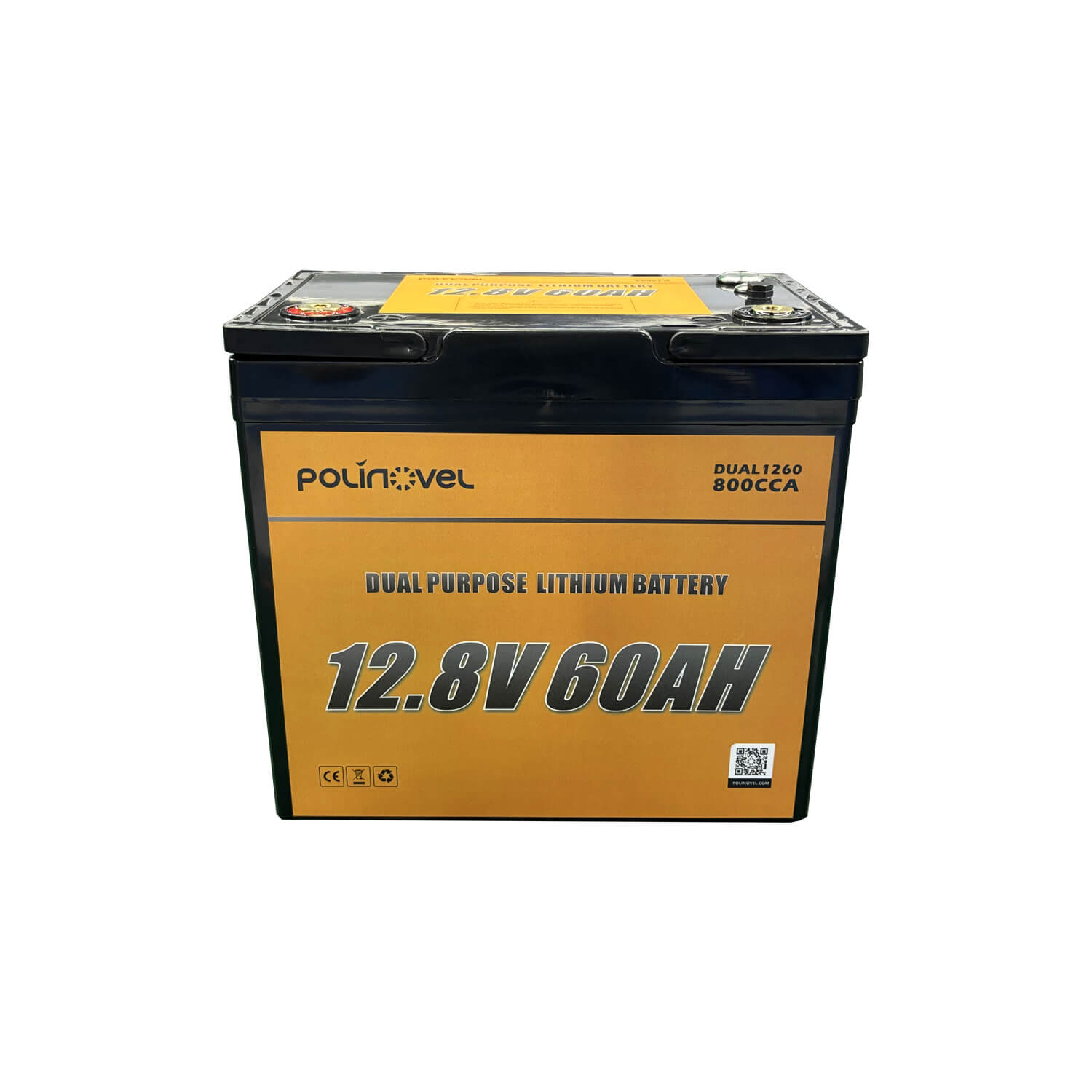
Understanding battery specifications prevents catastrophic failures on the water. You must align the battery's output capabilities with your engine's requirements and your accessory power demands. Guessing these numbers leads to dead batteries and towboat calls.
The battery must provide enough starting power for your outboard engine. For lead-acid batteries, check the engine manufacturer’s required Cold Cranking Amps (CCA). For lithium batteries, check the BMS peak discharge current. The battery’s starting output should meet the engine requirements to avoid starting problems or BMS shutdown.
Calculating onboard accessory loads is a mandatory step. You must audit every device on your vessel. A large MFD might draw 2.5 amps per hour. A live-imaging sonar module might draw 3 amps. A live well pump draws another 2 amps. If your total continuous draw is 10 amps per hour, an 8-hour fishing trip consumes 80Ah of capacity.
Marine Accessory | Average Draw (Amps/Hour) | 8-Hour Trip Consumption (Ah) |
|---|---|---|
12-inch MFD Sonar/GPS | 2.5A - 3.0A | 20Ah - 24Ah |
Live-Imaging Sonar Module | 2.0A - 3.5A | 16Ah - 28Ah |
Livewell Aerator Pump | 2.0A - 2.5A | 16Ah - 20Ah |
VHF Marine Radio (Standby) | 0.5A - 1.0A | 4Ah - 8Ah |
Marine Stereo System | 3.0A - 5.0A | 24Ah - 40Ah |
Total Estimated Load | 10.0A - 15.0A | 80Ah - 120Ah |
The 12V 100Ah capacity serves as the standard baseline for most average boats. However, 135Ah is rapidly becoming the emerging sweet spot for tournament anglers. This larger capacity supports multiple large-screen displays, active sonar transducers, and shallow water anchors without risking engine starting power at the end of the day. If your calculated load exceeds 80Ah, a 100Ah AGM battery will fail, as you only have 50Ah of usable capacity. A 100Ah lithium battery will survive, but a 135Ah lithium battery provides a safer buffer.
Reserve Capacity (RC) measures the number of minutes a battery can sustain a 25-amp draw before dropping below 10.5 volts. You can translate RC into real-world electronic runtime by dividing your total hourly amp draw into the battery's total rated capacity. A battery with a 190-minute RC provides roughly three hours of heavy accessory use before requiring an alternator charge.
Marine batteries commonly come in Group 24, 27, 31M, and 8D sizes. Group 24 is compact, while Group 27 and 31M provide more capacity for larger power needs. Group 8D is mainly used for large boats and commercial vessels.
Also check the terminal type and battery tray size before installation. Marine dual terminals support separate connections for engine cables and accessories, while a secure battery mount helps prevent movement and damage in rough water.
Evaluate the cycle life of your chosen chemistry to understand its long-term durability. AGM batteries typically endure 300 to 500 deep discharge cycles. Frequent deep discharges accelerate their wear, reducing their effective lifespan. If you drain an AGM battery to 20% capacity regularly, it may fail within two seasons. In contrast, LiFePO4 batteries routinely deliver 3,000 to 5,000 cycles with minimal capacity degradation, even when discharged to 100% of their rating. Over a ten-year period, a single lithium battery outlasts multiple AGM replacements. This extended replacement cycle makes lithium highly attractive for frequent boaters who log hundreds of hours on the water each season.
The marine battery market segments into distinct categories based on performance capabilities and internal construction. Selecting the right category depends on your vessel's demands and your willingness to upgrade supporting electrical infrastructure.
High-output lithium marine batteries are designed to support both engine starting and onboard electronics. Their BMS can provide the high peak current needed to start larger outboards, while higher capacities such as 135Ah provide longer runtime for marine electronics. They are lightweight and offer long cycle life, but the charging system must be compatible with lithium batteries.
Group 31M and 8D AGM batteries are reliable options for marine use. Their strong construction provides good vibration resistance and durability in demanding conditions. However, AGM batteries are heavy and require proper charging, especially during storage. Keeping the battery adequately charged helps reduce sulfation and maintain capacity.
12V 100Ah lithium batteries are a practical option for smaller boats, trolling motors, and moderate electrical loads. They are lightweight and provide stable voltage during use. However, buyers should check the BMS peak discharge rating, cold-temperature charging protection, and engine starting requirements. Some standard lithium batteries may not provide enough starting power for larger outboard engines.
Take the following steps to finalize your power system upgrade:
Check your outboard engine manual for the minimum required Cold Cranking Amps (CCA) or peak discharge surge.
Audit your boat to list every electronic device and calculate the total hourly amp draw to determine your Ah requirements.
Inspect your current onboard charger to verify if it features a dedicated, selectable lithium charging profile.
Measure your existing battery trays to confirm physical compatibility with Group 31M or custom lithium casing sizes.
Install a marine-grade DC-DC charger if you are transitioning to a lithium setup to protect your outboard's alternator.
A: A dedicated deep cycle battery lacks the thin lead plates required to deliver high instantaneous cranking amps. While it might start a small outboard in an emergency, repeated use will warp the thick battery plates and potentially leave you stranded. Always use a starting or dual purpose model for engine cranking.
A: Yes. Lithium batteries require a specific charging profile to balance their internal cells properly. Using a traditional lead-acid charger can result in incomplete charging, reduced lifespan, or trigger the Battery Management System (BMS) to shut down the battery to prevent overvoltage damage.
A: Lithium batteries have low internal resistance and pull maximum current continuously. This can cause standard marine alternators to overheat and burn out. You should install a marine-grade DC-DC charger to regulate the current and protect your engine's alternator during long runs.
A: Group 31M refers to the physical dimensions and terminal layout established by the Battery Council International (BCI). A Group 31M battery typically measures around 13 inches long, 6.8 inches wide, and 9.5 inches high. The "M" designates marine-specific threaded terminals for secure wire connections.
A: Outboard manufacturers traditionally use Cold Cranking Amps (CCA) based on legacy lead-acid testing standards. Lithium batteries use a BMS that limits maximum output. You must cross-reference the lithium battery's peak discharge surge rating to ensure it meets or exceeds the engine's CCA requirement.