

close
Choose Your Site
Global
Social Media


The market has definitively shifted. Upgrading to a LiFePO4 system is no longer a luxury modification. It is the baseline standard for replacing a failing power source in 2026. Buyers currently face a highly saturated market. You must choose between premium drop-in kits and budget-friendly imports. This makes matching specifications to specific cart setups difficult. A stock cart on flat terrain requires different power than a lifted cart on steep hills. This guide provides an objective, spec-driven framework. You will learn how to evaluate a Golf Cart Battery based on controller compatibility, smart features, and real-world performance metrics. We will break down continuous discharge limits, voltage requirements, and mounting realities. You will understand exactly what your specific vehicle requires to operate reliably without overspending on unnecessary capacity.

Total Lifetime Value: While upfront costs for LiFePO4 are higher, the 8–12 year lifespan, 95%+ usable capacity, and zero-maintenance requirements yield a significantly lower long-term expense compared to replacing lead-acid batteries every 3–5 years.
Discharge Rate Dictates Performance: Amp-hour (Ah) determines range, but the Battery Management System's (BMS) continuous and peak discharge ratings determine if a cart will stall on steep hills or when carrying heavy loads.
System Compatibility is Critical: Upgrading to a lithium golf cart battery often requires auditing the cart’s existing motor controller, solenoid, and onboard charger to prevent system faults or hardware damage.
Premium vs. Budget Trade-offs: Premium kits offer comprehensive mounting hardware, CAN bus integration, and robust support, whereas budget options require DIY electrical knowledge but offer unbeatable price-to-capacity ratios.
Table of Contents
Traditional lead-acid systems suffer from inherent physical limitations. They experience severe voltage sag under heavy loads. Improper charging routines cause rapid internal degradation. They add massive weight to your suspension. Lead-acid technology safely allows only a 50% Depth of Discharge. Pushing past this limit permanently damages the internal lead plates. Modern drivers demand better reliability. Lithium Iron Phosphate (LiFePO4) solves these legacy issues.
Lead-acid units typically last between 300 and 500 charge cycles. LiFePO4 technology easily delivers 3,000 to 5,000 cycles. This massive gap transforms how we view battery lifespan. Over a ten-year period, lead-acid requires multiple full replacements. You also spend hours adding distilled water and cleaning terminal corrosion.
Lithium eliminates these maintenance tasks entirely. The high energy efficiency during charging also reduces electricity usage. Lead-acid loses significant energy as heat during the charging cycle. LiFePO4 accepts charge current with nearly perfect efficiency. You stop wasting power from your wall outlet. The long-term savings become undeniable when you factor in these eliminated replacement and maintenance cycles.
Let's look at the physical breakdown of lead-acid degradation. When you leave a lead-acid pack in a discharged state, lead sulfate crystals form on the plates. This sulfation hardens over time. It permanently reduces the battery's ability to hold a charge. LiFePO4 chemistry does not suffer from sulfation. You can leave a lithium pack partially discharged for weeks without causing internal damage. This chemical stability makes lithium ideal for seasonal vehicles that sit idle during winter months.
Depth of Discharge (DoD) dictates how much power you can actually use. A 100Ah lithium Golf Cart Battery provides nearly 100Ah of usable energy. A 100Ah lead-acid bank safely provides only 50Ah before risking permanent damage. This means a lithium pack gives you twice the driving range for the same amp-hour rating.
Charging speed presents another massive advantage. Lithium packs reach a full charge in two to five hours. Lead-acid requires eight to twelve hours. You can also opportunity charge a lithium pack. Plugging it in for twenty minutes between rounds will not damage the battery memory. Lead-acid requires full, uninterrupted charge cycles to prevent sulfation. Lithium adapts to your actual driving schedule.
Consider a standard 18-hole round of golf. A heavy lead-acid cart might consume 40% of its capacity. If you play another 18 holes, you push the lead-acid pack past its safe 50% DoD limit. The voltage drops significantly. The cart becomes sluggish. A lithium pack maintains a flat voltage curve. It delivers full power until it is nearly empty. You get the same acceleration on hole 36 as you did on hole 1.
Swapping to lithium drastically reduces vehicle weight. You typically remove over 300 pounds of lead-acid batteries. A single lithium pack weighs roughly 70 pounds. Shedding this weight transforms vehicle dynamics. It is the equivalent of removing two adult passengers from the cart permanently.
Your suspension components experience significantly less wear. Factory leaf springs often sag under the constant burden of six 8-volt lead-acid batteries. Removing that mass restores the factory ride height. Acceleration improves instantly. Braking distances shorten, extending brake pad life. The cart also maintains consistent speeds when climbing steep hills. Heavy lead-acid carts often slow to a crawl on inclines. A lightweight lithium cart powers up hills with minimal effort.
This weight reduction also translates to less tire wear over the lifespan of the vehicle. You will notice lighter steering effort. The front end feels more responsive. The motor draws fewer amps to move the lighter chassis. This efficiency gain further extends your driving range.
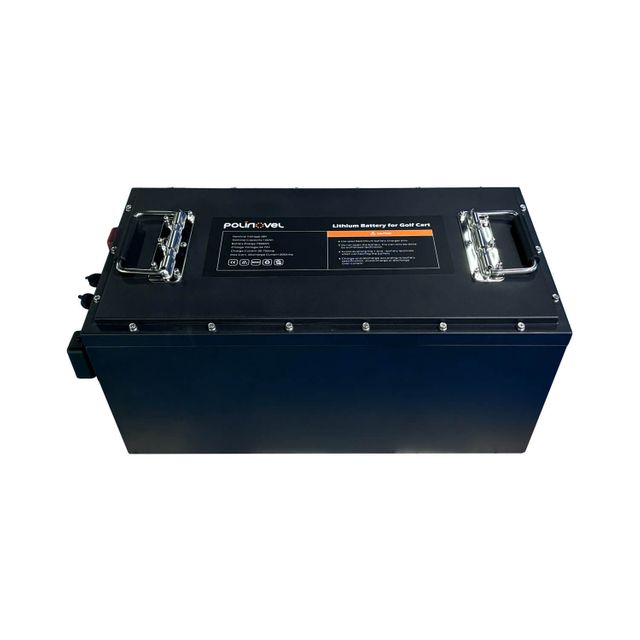
You must evaluate any lithium replacement through strict technical lenses. Ignoring these specifications leads to poor performance or system failure. Buying solely based on amp-hours is a common mistake. You must look deeper into the internal components.
You must match the battery voltage to your cart’s motor and controller. The 48V ecosystem remains the standard for most modern carts. It provides an excellent balance of speed, torque, and efficiency. Older carts from the 1990s often utilize 36V systems. You can find 36V lithium drop-ins to keep these older carts running reliably.
High-performance 72V and 76V systems are gaining traction. These higher voltages suit heavily modified carts requiring massive torque. Supplying too much voltage to a stock system causes catastrophic damage. Never over-volt a stock setup without upgrading the controller first. A 72V battery will instantly destroy a factory 48V controller and motor.
When upgrading voltage, you must also upgrade your main power cables. Factory 6 AWG cables cannot handle the increased current of a high-performance lithium setup. You must install 2 AWG or 4 AWG welding cable. This prevents voltage drops and keeps the cables from melting under heavy loads.
Recommended Wire Gauge for Lithium Upgrades
System Voltage | Controller Amp Rating | Minimum Wire Gauge |
|---|---|---|
48V | 250A - 300A | 4 AWG |
48V | 400A - 500A | 2 AWG |
72V | 600A+ | 1/0 AWG |
Amp-hour ratings directly translate to your driving range. A standard 100Ah or 105Ah pack typically yields 30 to 40 miles per charge. Actual mileage depends heavily on cart weight, tire size, and terrain. Select your capacity based on daily usage.
Always buy slightly more capacity than you think you need. Cold weather and heavy payloads will reduce your effective range. If you drive a lifted cart with 23-inch tires, your motor works harder. This increased mechanical load drains the battery faster. A 105Ah pack might only yield 25 miles on a lifted cart driven off-road.
The Battery Management System (BMS) controls power delivery. Discharge rates represent the most critical failure point for budget batteries. Continuous discharge dictates the power available for steady cruising. A rating of 100A continuous is usually sufficient for stock carts. Peak discharge dictates the power available for initial acceleration.
You need high peak discharge to climb steep hills. Lifted carts with oversized tires demand massive peak current. If the rating is too low, the BMS will shut down the cart to protect the cells. You will lose all power until the system resets. Look for peak discharge ratings of at least 300A for three to five seconds if you have a lifted cart.
Let's break down the math. A stock 48V cart pulling up a mild incline might draw 150 amps for a few seconds. A budget lithium pack with a 100A peak limit will trip immediately. You must read the BMS spec sheet carefully. Do not assume a 100Ah battery can output 100 amps continuously. Some budget units cap continuous output at 50 amps. This is entirely inadequate for a golf cart.
Integrated Bluetooth connectivity is a standard requirement in 2026. Dedicated smartphone apps allow for real-time system monitoring. You can track the exact State of Charge (SOC) instantly. The app displays cell balancing data and internal temperatures.
Diagnostic alerts warn you of potential issues before they cause a breakdown. This visibility prevents you from getting stranded far from an outlet. Another vital smart feature is low-temperature charging protection. Charging a lithium battery below freezing causes irreversible damage. A smart BMS automatically blocks charge current when temperatures drop too low.
Advanced BMS units also feature short-circuit protection and over-voltage cutoffs. If your motor controller fails and shorts out, the BMS severs the connection instantly. This prevents electrical fires and protects the internal lithium cells from catastrophic damage.

The 2026 market offers distinct categories based on technical expertise and performance needs. Understanding these categories helps you align your purchase with your mechanical abilities.
Comparison of Top 2026 Lithium System Categories
System Category | Typical Ah Range | Continuous Discharge | Peak Discharge | Best Suited For |
|---|---|---|---|---|
Premium Drop-In Kits | 105Ah - 160Ah | 150A - 200A | 400A - 600A | Upgraded controllers, lifted carts, seamless install |
Legacy Brand Upgrades | 105Ah | 100A - 150A | 300A - 400A | Users wanting established dealer support networks |
Budget-Friendly Single Units | 100Ah | 100A | 200A - 300A | Stock carts, flat terrain, DIY installers |
Premium kits provide a complete, all-inclusive ecosystem. They include the battery, charger, dash gauge, and custom mounting brackets. Many feature CAN bus communication for seamless integration. CAN bus allows the battery to communicate directly with aftermarket motor controllers.
These systems deliver exceptionally high continuous discharge rates. This makes them ideal for upgraded controllers like Navitas. Installation is seamless for specific models from Yamaha, EZGO, and Club Car. Build quality is highly durable. Warranty support is robust and reliable.
The primary drawback is the initial investment. You pay for comprehensive hardware and integration engineering. However, the included custom brackets save hours of fabrication time. The included chargers are perfectly calibrated to the specific BMS. This eliminates the guesswork of matching third-party chargers to bare-bones batteries.
Traditional lead-acid giants have fully entered the 48V 105Ah lithium space. They leverage decades of industry experience to build consumer trust. They understand the harsh environments these vehicles operate in.
These brands offer established, widespread dealer networks. You can easily find local support. They provide proven brand reliability and conduct rigorous safety testing. Their casing designs often mimic traditional battery footprints for easier placement.
Their technical specifications frequently mirror newer, more agile competitors. They rarely offer the extreme peak discharge rates found in specialized premium kits. You are buying peace of mind and local warranty support rather than bleeding-edge performance specs.
The market now features highly capable 48V 100Ah options. Newer variants include smart features like Bluetooth monitoring. These units strip away the extra accessories to focus purely on power storage.
They offer an unbeatable capacity-to-investment ratio. These units perform excellently in stock, non-lifted carts on flat terrain. They increasingly include Bluetooth monitoring capabilities. They are perfect for users comfortable with basic electrical work.
They typically feature lower peak discharge limits. This increases the risk of the BMS tripping on steep hills. You must create DIY mounting solutions. They often exclude a compatible charger, requiring a separate purchase. You must also source your own state-of-charge meter and wire it to the dashboard manually.
Converting to lithium power involves hidden technical hurdles. You must address these to ensure reliable operation. Simply dropping a lithium block into your cart is rarely the end of the process.
A high-performance lithium pack can expose weaknesses in aging components. Stock solenoids and controllers often fail under increased current delivery. A factory solenoid is typically rated for 50A to 100A continuous. When you install a lithium Golf Cart Battery capable of delivering 200A, the old solenoid can melt.
You must evaluate these parts before installation. Upgrade your solenoid to a heavy-duty 200A or 400A model. You also need a new controller when adding a high-torque motor. The battery can only deliver as much power as the controller allows through to the motor.
Check your existing wiring harness. Look for melted insulation or corroded ring terminals. A high-output lithium battery will push maximum current through these old wires. Any resistance caused by corrosion will generate extreme heat. Replace any suspect cables with marine-grade tinned copper wire.
You cannot use your existing lead-acid charger with a lithium unit. They use entirely different charging algorithms and voltage cutoffs. Using an old charger will damage the new cells. It will also trigger the BMS safety shutdowns constantly.
Older Club Car models present a specific challenge. You must bypass the cart's On-Board Computer (OBC) when installing a new lithium charger. The factory OBC regulates the old lead-acid charger. It will block the new standalone lithium charger from functioning. Bypassing the OBC requires splicing a specific wire near the controller. Failing to do so prevents the new charger from operating correctly.
The following OBC bypass procedure applies only to specific legacy Club Car models equipped with an OBC and only when the selected lithium conversion kit explicitly requires this modification. Club Car charging architectures vary by model and model year. Verify the vehicle serial number, charging system, wiring diagram, and battery/charger manufacturer's instructions before making any wiring changes. If these conditions do not match your cart, do not use this procedure.
Yamaha and EZGO carts generally do not have an OBC. You simply wire the new lithium charger receptacle directly to the main positive and negative battery terminals. Always use a charger with a dedicated wake-up function. If your BMS goes into sleep mode after a low-voltage event, a standard charger might not detect the battery. A wake-up charger sends a small pulse to reactivate the BMS.
Physical installation requires careful planning. Lithium packs are significantly smaller than the lead-acid batteries they replace. You must secure this smaller unit inside a large, empty battery tray. Loose batteries suffer from vibration damage over time.
Old battery trays are often covered in corrosive battery acid rust. You must clean and paint the metal before installing the new unit. Premium kits include custom brackets that bolt directly into factory holes. Budget options require you to fabricate secure tie-downs. You must use heavy-duty straps and base plates to prevent the battery from shifting during transit.
Consider weight distribution. Lead-acid batteries distribute weight evenly across the entire tray. A single lithium pack concentrates the weight in one spot. Mount the new battery as close to the center of the cart as possible. This maintains proper handling and prevents the cart from leaning to one side.
Audit your current motor controller and solenoid specifications to verify they can handle a 200A+ peak discharge rate.
Measure your physical battery tray dimensions and fabricate heavy-duty tie-downs if you select a budget-friendly bare unit.
Inspect your main power cables for corrosion and upgrade to 4 AWG or 2 AWG welding cable to prevent voltage drops.
Verify if your specific cart model requires an On-Board Computer (OBC) bypass before wiring the new lithium charger receptacle.
For buyers looking for a reliable and application-focused lithium battery solution, Polinovel is an experienced lithium-ion battery manufacturer integrating research, development, design, and production, with LiFePO4 solutions for golf carts and other lead-acid replacement applications. With more than 15 years of industry experience and customers across over 80 countries, Polinovel also provides customized battery solutions supported by smart battery technologies and application-focused engineering.
A: No. Lead-acid chargers use different voltage cutoffs and charging algorithms. Using one will fail to charge the lithium cells properly and can cause permanent damage to the Battery Management System. You must use a charger specifically designed for LiFePO4 chemistry.
A: A lithium battery does not directly increase top speed unless you upgrade to a higher voltage system. However, shedding 300 pounds of lead-acid weight significantly improves acceleration. Your cart will also maintain its top speed much better when climbing steep hills.
A: Yes, if you have an older Club Car (typically pre-2014) with an On-Board Computer. The OBC regulates the factory lead-acid charger. When you switch to a standalone lithium charger, the OBC will interfere with the charging process. You must bypass it for the new charger to work.
A: If your cart draws more amps than the BMS allows, the system will protect itself by shutting down entirely. This typically happens during hard acceleration or when climbing steep hills. You will lose all power until the BMS resets. Always match the peak discharge rating to your motor's demands.
A: A high-quality LiFePO4 unit typically lasts between 8 and 12 years under normal usage. They are rated for 3,000 to 5,000 charge cycles while retaining at least 80% of their original capacity. This far outlasts traditional lead-acid batteries, which usually fail after 3 to 5 years.
A: Yes, provided you use a smart lithium charger. Smart chargers automatically monitor the voltage and only supply power when needed. However, you must ensure the battery has low-temperature charging protection. Charging lithium cells below freezing will cause irreversible internal damage.