

close
Choose Your Site
Global
Social Media


Transitioning a material handling fleet from traditional lead-acid power to modern lithium-ion technology represents a major capital expenditure decision. The return on this operational investment hinges entirely on accurate longevity projections. Fleet managers frequently struggle to predict true equipment endurance due to conflicting manufacturer claims, highly variable shift structures, and the fundamental differences between chronological years, operating hours, and charge cycles.
Evaluating power systems requires moving far beyond glossy marketing brochures. Facility operators must analyze cycle ratings, depth of discharge (DoD) thresholds, and the physical realities of opportunity charging in high-throughput environments. Understanding exactly how to measure and maximize Forklift Battery Lifespan dictates whether a facility achieves seamless uptime or suffers from premature equipment failure and disrupted workflows. We will break down the exact metrics, environmental factors, and operational habits that determine how long your equipment will actually last on the warehouse floor.

Baseline Metrics: Modern lithium-ion forklift batteries typically deliver 3000~5000 charge cycles, translating to 7 to 10 years (or 10,000 to 12,000 operating hours) in standard 300-day, multi-shift operations.
The Lead-Acid Contrast: Traditional lead-acid batteries max out at 3000~5000 cycles, requiring strict maintenance and cooling periods that lithium alternatives bypass.
Capacity Fade Reality: A forklift battery reaches the end of its functional lifespan when its capacity degrades to 80% of its original rating, not when it completely fails.
Operational Dependency: True lifespan is dictated by the Battery Management System (BMS), charging infrastructure compatibility, and adherence to opportunity charging best practices.
Table of Contents
Measuring equipment longevity strictly in chronological years presents a highly flawed metric for material handling operations. Without standardizing the usage rate and operating hours, a single year in a light-duty lumber yard looks vastly different from a year in a 24/7 cross-docking distribution center. Fleet managers must evaluate longevity through the specific metrics of cycles and hours to accurately project replacement schedules and avoid unexpected downtime.
A charge cycle occurs when a power unit discharges to a specific Depth of Discharge (DoD) and recharges back to full capacity. However, different chemistries track these cycles differently. Lithium-ion batteries calculate partial charges cumulatively. Plugging a lithium unit into a charger for a 20% power boost during a 15-minute break does not consume a full cycle. Instead, five of these 20% charges add up to equal one complete cycle.
Lead-acid batteries operate under stricter chemical limitations. Short, partial charges actively degrade the internal lead plates through a process called sulfation. If an operator plugs a lead-acid battery in for a quick 20% charge, the battery registers that event as one full cycle, drastically reducing its overall lifespan. This fundamental difference in cycle calculation makes lithium-ion far superior for fast-paced environments where equipment cannot sit idle for hours.
Calculating operational years requires a specific mathematical framework. You determine the timeline by dividing the total cycle rating by the cycles used per day, and then dividing that number by the total workdays per year. The material handling industry utilizes a benchmark of 10,000 to 12,000 operating hours as a highly accurate measurement for lithium-ion fleet utilization tracking.
To calculate your specific operational timeline, follow these steps:
Identify the manufacturer's maximum cycle rating for your specific battery model (e.g., 3,000 cycles).
Determine your daily cycle consumption based on shift intensity (e.g., a heavy three-shift operation might consume 1.2 cycles per day).
Multiply your daily cycle consumption by your facility's annual operating days (e.g., 1.2 cycles x 300 days = 360 cycles per year).
Divide the total cycle rating by your annual cycle consumption (e.g., 3,000 / 360 = 8.3 years).
Operational intensity heavily skews the chronological timeline. Single-shift, light-duty operations might stretch a battery's chronological timeline well beyond a decade because they consume fewer hours per day. Conversely, three-shift, heavy-duty environments will consume those 12,000 hours much faster. The heavy-duty application condenses the chronological lifespan into perhaps six or seven years while delivering the exact same total work output and energy throughput.
Shift Utilization vs. Chronological Lifespan Projection
Operational Intensity | Shifts Per Day | Estimated Annual Hours | Projected Chronological Lifespan (Years) |
|---|---|---|---|
Light Duty | 1 Shift (8 Hours) | 1,000 - 1,500 Hours | 10+ Years |
Medium Duty | 2 Shifts (16 Hours) | 2,000 - 3,000 Hours | 7 - 9 Years |
Heavy Duty | 3 Shifts (24 Hours) | 3,500 - 4,500 Hours | 5 - 7 Years |
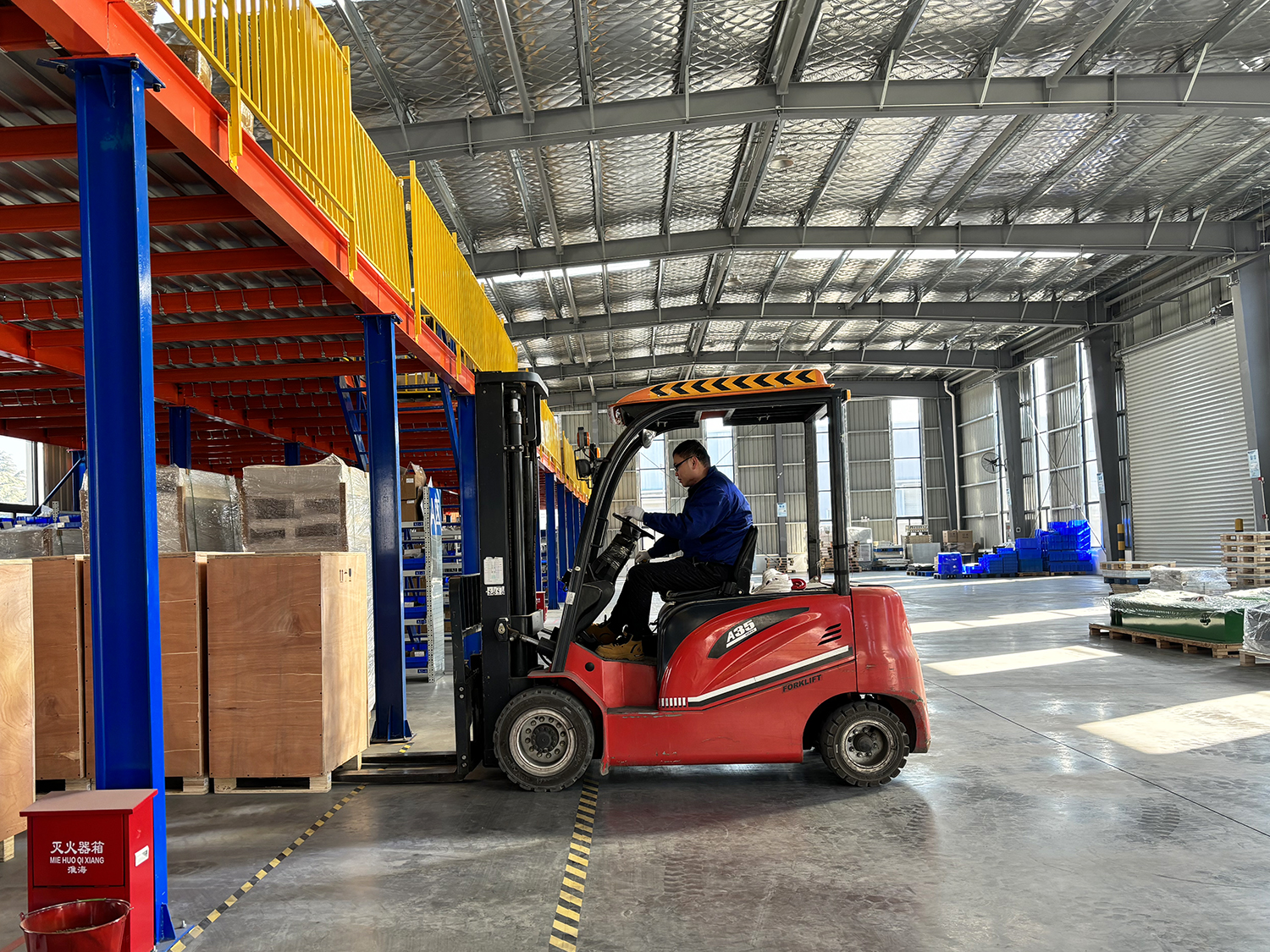
Comparing the two dominant industrial power chemistries reveals stark contrasts in longevity, operational availability, and daily maintenance requirements. The physical limitations of each chemistry dictate how fleets must structure their daily workflows. Understanding these differences helps facility managers optimize their equipment deployment and charging infrastructure.
Chemistry Performance and Operational Metrics
Metric | Lead-Acid Technology | Lithium-Ion (LiFePO4) Technology |
|---|---|---|
Average Cycle Life | 1,000 - 1,500 Cycles | 3000~5000 Cycles |
Charging Protocol | conventional lead-acid charging:8-8-8 Rule | Opportunity Charging (On-Demand) |
Daily Maintenance | Watering, Equalization Charges | Zero Daily Maintenance |
Ventilation Needs | Dedicated Exhaust Rooms Required | No Ventilation Required |
Traditional lead-acid units hit a hard physical ceiling at 3000~5000 cycles. Extracting this maximum cycle count requires flawless adherence to the 8-8-8 rule: eight hours of active use, eight hours of continuous charging, and eight hours of mandatory cooling down. Violating this rigid schedule by skipping the cooling phase or interrupting the charge cycle accelerates internal heat buildup.
This thermal stress warps the lead plates, boils off the electrolyte solution, and drastically reduces the battery's usable life. In a busy warehouse, operators frequently cut corners. They might pull a battery off the charger after only four hours of cooling because they need a truck immediately. This single action causes micro-damage to the lead plates. Over months of repeated abuse, the battery loses its ability to hold a full charge, forcing premature replacement.
Modern lithium-ion alternatives establish a robust baseline of 3000~5000 cycles. Industrial equipment primarily utilizes Lithium Iron Phosphate (LiFePO4) chemistry due to its exceptional chemical and thermal stability. LiFePO4 resists the degradation typically caused by irregular charging patterns. The cathode material remains structurally intact even when operators plug and unplug the equipment multiple times per shift.
This stability makes lithium highly suitable for fast-paced, unpredictable material handling environments. The intercalation process—where lithium ions move between the anode and cathode—generates very little heat compared to the chemical reactions in lead-acid batteries. This low internal resistance means the battery accepts high-amperage charges rapidly without suffering thermal damage, allowing for aggressive opportunity charging during short operator breaks.
Beyond raw cycle counts, lithium technology fundamentally alters warehouse efficiency by eliminating the need for mid-shift battery swapping. Facilities instantly regain valuable floor space previously dedicated to massive, ventilated charging rooms and overhead hoists. The complete removal of daily watering maintenance ensures consistent power delivery without relying on operator compliance.
You must factor in the cost-per-cycle and cost-per-operating-hour metrics when evaluating long-term ROI. A lead-acid battery might require two or three replacements to match the lifespan of a single lithium unit. Furthermore, the labor hours spent watering batteries, cleaning acid spills, and swapping heavy units mid-shift drain operational efficiency. By eliminating these maintenance tasks, lithium batteries provide a significantly higher return on investment over their 10-year lifespan.
Environmental conditions and operational habits dictate whether a power unit successfully hits the 12,000-hour mark or fails prematurely. Fleet managers must control these variables to protect their equipment. You cannot simply install a lithium battery and ignore it; you must actively manage the charging environment and operator behavior.
Maintaining a state of charge between 20% and 80% maximizes lithium cell longevity. This specific window prevents the chemical stress associated with absolute maximum voltage and absolute minimum voltage. Consistently draining a lithium battery to 0% causes severe deep discharge stress. While lithium handles deep discharges significantly better than lead-acid, frequent zero-percent drops force the internal cells to work harder to recover.
When a battery drops below 10%, the internal resistance spikes. The charger must push harder to overcome this resistance during the initial charging phase, generating unnecessary heat. By enforcing opportunity charging—plugging the truck in during 15-minute coffee breaks and 30-minute lunches—you keep the battery in the optimal voltage range. This practice minimizes chemical wear and tear, ensuring the cells degrade at the slowest possible rate.
Cold storage and freezer applications physically slow down lithium cell kinetics. Operating continuously in sub-zero temperatures increases internal resistance, which forces the battery to expend more energy to perform standard lifts. While specialized internal heaters mitigate this issue, extreme cold can still impact overall cycle efficiency. Class II narrow aisle reach trucks operating in blast freezers require specific battery configurations to survive the thermal shock of moving between cold zones and ambient loading docks.
High-heat manufacturing environments pose a much greater threat. Thermal degradation accelerates rapidly when ambient temperatures consistently exceed the manufacturer's recommended operating thresholds. Heat breaks down the internal electrolyte and damages the separator between the anode and cathode. Facilities operating foundries, glass manufacturing plants, or unventilated warehouses in hot climates must monitor battery temperatures closely to prevent premature cell aging.
Temperature Impact on Battery Degradation
Operating Environment | Ambient Temperature Range | Impact on Lithium Cell Lifespan |
|---|---|---|
Cold Storage / Freezers | -20°C to 0°C (-4°F to 32°F) | Moderate capacity reduction; requires internal heaters to prevent lithium plating during charging. |
Standard Warehouse | 15°C to 25°C (59°F to 77°F) | Optimal range; maximum cycle life and capacity retention achieved. |
High-Heat Manufacturing | 35°C to 50°C+ (95°F to 122°F+) | Accelerated chemical degradation; potential for thermal runaway if BMS fails. |
The BMS functions as the central nervous system of the power unit. It actively monitors cell voltage, regulates temperature, and balances the energy load across all internal modules. The BMS prevents catastrophic events like overcharging, over-discharging, and thermal runaway. It communicates directly with the forklift's motor controller and the external charger to ensure safe power delivery.
A substandard or poorly programmed BMS will fail to balance the cells correctly. When cells become unbalanced, some modules work harder than others, leading to localized degradation. The entire unit loses efficiency and will fail long before the physical lithium cells naturally degrade. Investing in a battery with a robust, highly communicative BMS is non-negotiable for achieving a 10-year lifespan.
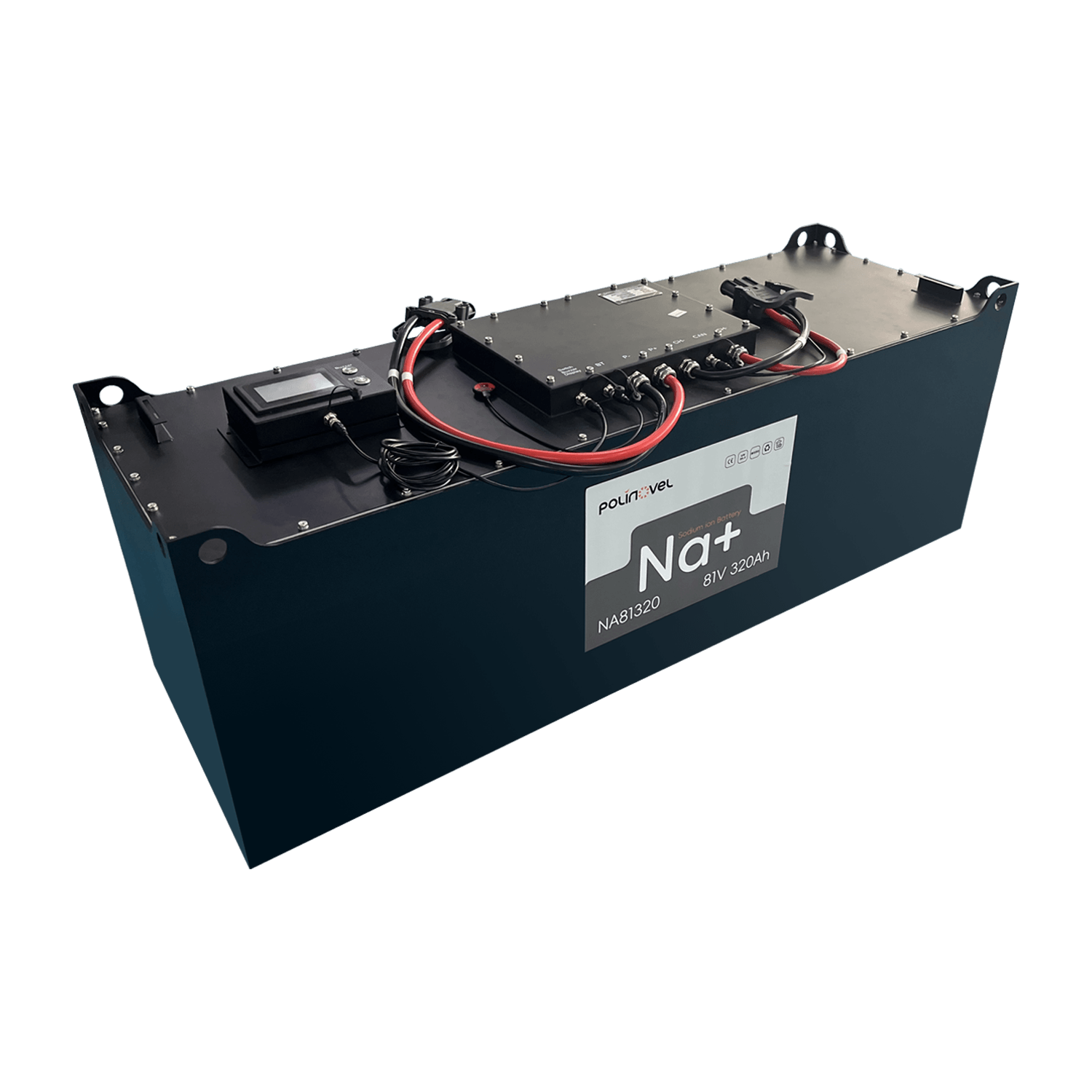
Adopting advanced power technology introduces real-world integration challenges. Facility managers must address these risks proactively to prevent premature equipment degradation. Ignoring the technical requirements of lithium integration will quickly erode the expected operational benefits.
The term "end of life" in material handling does not mean the battery outputs zero power or suddenly stops working. It indicates the unit can only hold 80% of its original amp-hour rating. For example, a 500Ah battery will only store 400Ah at this stage. Operating with 20% less runtime per shift forces operators into more frequent charging intervals.
This voltage sag under heavy load eventually disrupts workflow. A forklift that previously completed a full 8-hour shift on a single charge might now require a mid-shift charging session to avoid dying on the floor. This signals the point where replacement becomes economically necessary to maintain facility throughput. Pushing a battery past this 80% threshold results in diminishing returns and increased operator frustration.
Manufacturer warranties frequently include conditional clauses that fleet managers overlook, such as "10 years or 3,000 cycles, whichever comes first." High-throughput operations will hit the cycle limit years before the chronological decade expires. You must read the fine print to understand exactly what constitutes a cycle in the eyes of the manufacturer.
Original Equipment Manufacturers (OEMs) also mandate specific data-logging requirements. The BMS records every charge, discharge, and temperature spike via CAN bus communication. Failing to maintain or provide these digital logs can instantly void warranty claims regarding premature degradation. If an operator consistently drains the battery to 0% and the BMS logs this abuse, the manufacturer will likely deny a warranty replacement claim.
Pairing lithium batteries with mismatched chargers or inadequate facility electrical infrastructure creates severe operational risks. Lithium units require specific handshake protocols with the charger to regulate voltage and current. The BMS must tell the charger exactly how much power to deliver and when to taper off the current as the battery reaches 100%.
Incompatible charging setups lead to micro-cycling, where the charger rapidly turns on and off, or excessive heat generation. Both scenarios permanently damage cell integrity and drastically shorten the usable lifespan of the equipment. Upgrading to lithium often requires upgrading the facility's electrical panels to handle the high-amperage draw of fast chargers. Attempting to run fast chargers on undersized electrical infrastructure will trip breakers and prevent the batteries from charging properly.
Protecting the equipment investment requires actionable, enforced protocols. Fleet managers must implement strict operational standards to ensure the battery reaches its maximum potential. Technology alone cannot overcome poor management and operator negligence.
Establish clear, non-negotiable rules for equipment operators. You must integrate charging habits into daily workflow expectations.
Require operators to plug the forklift into the charger during any break lasting longer than 15 minutes.
Instruct teams to avoid leaving fully charged units on the charger indefinitely over long weekends.
Mandate that operators never bypass BMS warning alarms indicating low voltage.
Designate specific charging zones near break rooms to make opportunity charging convenient.
Even though the BMS provides overcharge protection, maintaining a constant 100% state of charge creates unnecessary chemical tension within the cells. Unplugging the equipment when fully charged or utilizing smart chargers that automatically disconnect power extends the overall lifespan.
Lithium technology eliminates electrolyte watering, but achieving a decade of heavy industrial use still requires physical upkeep. "Maintenance-free" refers to the internal chemistry, not the external hardware.
Schedule routine visual inspections of all external cables and heavy-duty Anderson connectors.
Look for signs of pitting, carbon buildup, or frayed wiring that increase electrical resistance.
Clean the battery casing to prevent conductive dust buildup.
Ensure the BMS receives regular software updates from the manufacturer to maintain optimal charging algorithms and accurate cell balancing.
A damaged connector creates resistance, which generates heat during charging. This heat can melt the connector housing and damage the battery's main power cables, leading to expensive repairs that fall outside of standard warranty coverage.
Deploy IoT sensors and telematics dashboards to track charging habits, temperature fluctuations, and cycle counts in real-time. Fleet managers should review this data weekly to identify operators who consistently drain batteries below 10% or skip opportunity charging sessions.
Using this granular data allows management to preemptively correct poor operator behavior before it causes permanent hardware damage. If the telematics dashboard shows a specific forklift consistently running hot, maintenance teams can investigate whether the truck has a dragging brake or a failing motor that is overdrawing power from the battery. Data-driven management is the most effective tool for maximizing equipment longevity.
To optimize your material handling fleet and ensure maximum equipment longevity, take the following actions immediately:
Audit your current fleet's daily cycle usage and track exact shift downtime to determine opportunity charging viability.
Assess your facility's electrical infrastructure to ensure it can support the high-amperage draw required for fast-charging stations without tripping breakers.
Request a custom operational analysis from a certified vendor to project your specific usage timeline based on your facility's unique load requirements and shift structures.
Implement a mandatory operator training program focused specifically on lithium-ion charging protocols, connector maintenance, and BMS alarm responses.
For businesses looking to transition from traditional lead-acid batteries to more efficient lithium power solutions, Polinovel provides LiFePO4 battery solutions backed by engineering support, OEM/ODM capabilities, and a strong focus on product quality and safety. With experience serving demanding lithium battery applications, Polinovel can help material handling operators select battery solutions that better match their equipment, charging infrastructure, and long-term operational requirements.
A: A fully charged lithium unit typically delivers 8 to 12 hours of continuous runtime. The exact duration depends heavily on the application intensity, the weight of the loads being lifted, the operating temperature, and the specific amp-hour capacity of the battery model.
A: Fleet managers can expect a benchmark of 10,000 to 12,000 total operating hours. You achieve this longevity by implementing frequent opportunity charging, maintaining the state of charge within optimal thresholds, and preventing deep discharges.
A: Opportunity charging can be used with compatible lead-acid systems, but it requires the correct charger profile, temperature management, full/equalization charging strategy, and application planning. Lithium-ion batteries are generally more flexible for frequent opportunity charging.
A: The material handling industry considers a battery at its end of life when it degrades to 80% of its original capacity. It still functions, but the reduced runtime per shift makes it inefficient for demanding warehouse operations.
A: Yes, a lithium unit can easily last 10 years. This equates to 3000~5000 cycles in a standard 300-day work year. Reaching this milestone requires proper depth of discharge management, correct charger pairing, and routine physical inspections.
A: Once a battery falls below the 80% capacity threshold for forklifts, it enters a secondary life phase. These units are frequently repurposed for stationary energy storage systems, such as solar grids, before eventually undergoing material recycling.
A: Premature degradation usually stems from consistently draining the battery to zero percent, operating in extreme temperature conditions without thermal management, or using a mismatched charger. A failing Battery Management System (BMS) can also accelerate cell damage.