

close
Choose Your Site
Global
Social Media


Off-grid, RV, and marine energy storage standards are shifting rapidly. Lithium technology has matured significantly over the last decade, establishing new baselines for reliability and power delivery. However, legacy lead-acid systems still hold specific market shares in various industrial and recreational applications. Users face a distinct challenge with system sizing and resource allocation when designing a new power bank. You must balance initial capital requirements against hidden replacement cycles, severe weight penalties, and the usable capacity limits inherent to traditional lead-acid setups. This guide provides an objective, data-driven comparison based on lifecycle, performance metrics, and implementation requirements. We evaluate the exact specifications needed to build a reliable power system for heavy continuous loads, helping you navigate the complexities of modern energy storage without relying on outdated assumptions.
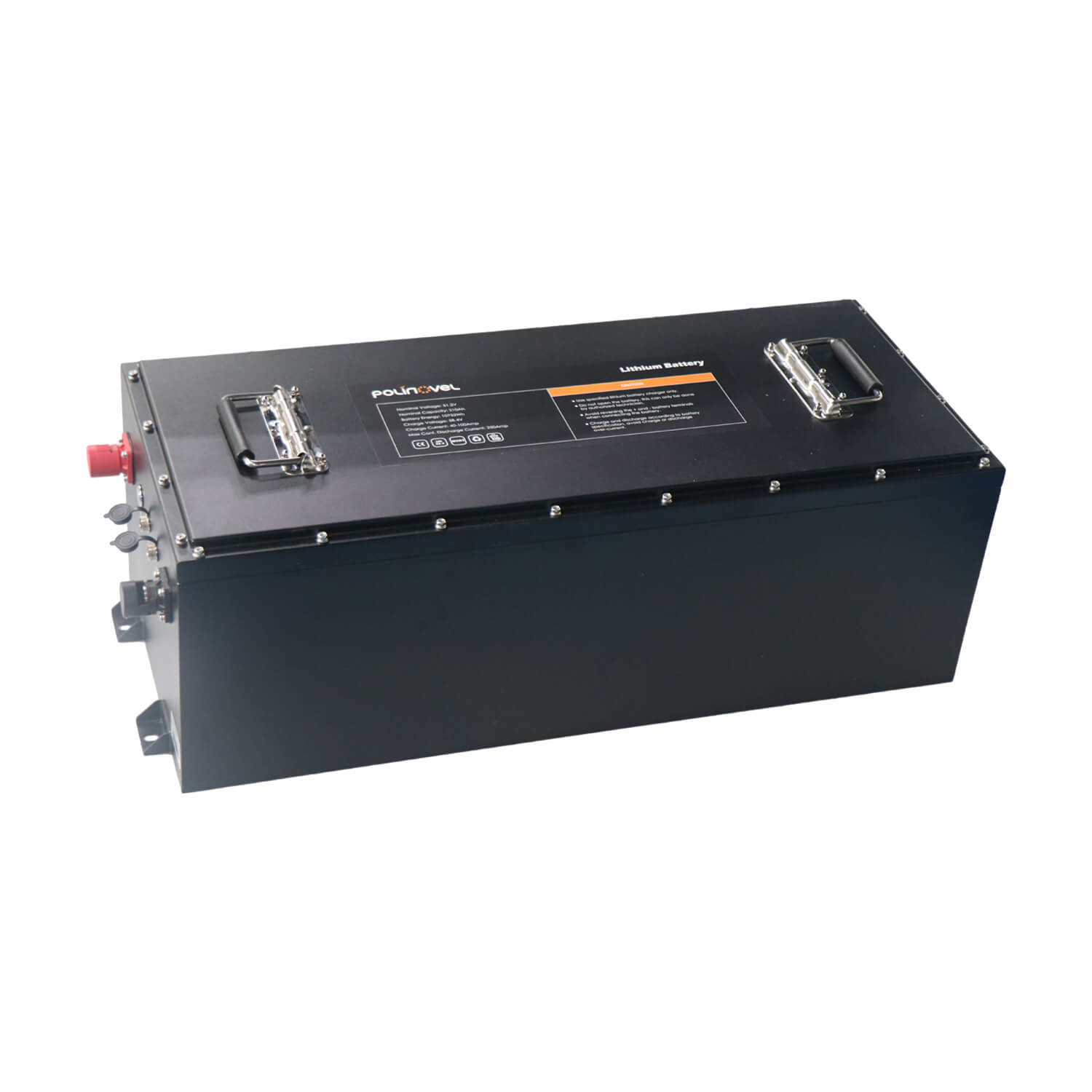
Usable Capacity: LiFePO4 batteries safely allow 80–100% Depth of Discharge (DoD), whereas AGM batteries are practically limited to 50% DoD to prevent accelerated degradation.
Weight and Footprint: LiFePO4 systems are 50–60% lighter and physically smaller than AGM equivalents, offering drastically higher volumetric energy density for weight- and space-sensitive applications like RVs and marine vessels.
Implementation Friction: Upgrading from AGM to LiFePO4 is rarely a "drop-in" replacement; it requires auditing charge controllers, alternators, and cold-weather charging protocols.
Table of Contents
AGM is a sealed lead-acid variant engineered for specific durability requirements. The electrolyte is suspended in tightly packed fiberglass mats rather than sloshing freely inside the casing. This design makes them maintenance-free compared to flooded lead-acid alternatives, meaning they do not require watering or specific upright mounting orientations. AGM units deliver high surge current capability, making them highly effective for starting engines, initiating heavy compressor loads, or operating winches. However, they suffer from high self-discharge rates and degrade quickly if left in a partially discharged state for extended periods. The internal lead plates are prone to sulfation, a chemical process that permanently reduces capacity if the battery is not regularly brought to a full state of charge.
When installing an AGM Battery bank, technicians must account for heavy structural support. The lead density requires reinforced battery trays and heavy-duty strapping. Ventilation remains a factor, though less critical than with flooded batteries, as AGM valves can still vent hydrogen gas under severe overcharging conditions. The technology is robust and well-understood, but it relies on a century-old chemical foundation that imposes strict operational limits on modern high-draw applications.
LiFePO4 chemistry differs entirely from the volatile lithium-ion variants found in consumer electronics. While devices like laptops and electric vehicles typically use NMC or NCA chemistries to maximize energy density, LiFePO4 prioritizes chemical stability, thermal safety, and longevity. Every LiFePO4 Battery requires an internal Battery Management System (BMS). This electronic board actively monitors individual cell voltages, temperatures, and current flow. It prevents overcharging, deep depletion, and thermal events by physically disconnecting the internal cells from the external terminals if parameters exceed safe limits.
The chemistry provides a remarkably flat discharge curve, meaning appliances receive consistent voltage until the battery is nearly empty. This structural stability allows the cells to endure thousands of deep discharge cycles without the physical degradation seen in lead plates. Installation requires different considerations, primarily focusing on protecting the sensitive internal electronics from extreme moisture and ensuring the charging sources are programmed to respect the strict voltage parameters dictated by the BMS.

The 50% DoD rule strictly dictates AGM usage in the field. Discharging a lead-acid bank past half its rated capacity causes exponential lifecycle penalties. Lead sulfate crystals harden rapidly on the internal plates, choking the battery's ability to hold a charge. Conversely, lithium systems routinely discharge to 10-20% without structural damage. Many modern BMS configurations even allow safe depletion to 0% of the rated capacity without harming the internal cell chemistry.
Consider a standard sizing example for an off-grid cabin. A 200Ah AGM bank provides only 100Ah of usable energy before hitting the damage threshold. A 100Ah lithium battery provides the exact same usable energy in half the physical footprint. Take a real-world case study: running a 12V DC compressor refrigerator overnight. An AGM bank often experiences voltage drop under the continuous load. The refrigerator's low-voltage disconnect triggers prematurely, shutting off the appliance even though the battery technically has capacity left. The lithium alternative maintains a high, stable voltage, keeping the compressor running and the food cold until morning.
Industry cycle ratings reveal a massive performance gap between the two technologies. Standard AGM units deliver 300 to 500 cycles when strictly adhering to the 50% DoD limit. Pushing them harder reduces that lifespan drastically. Lithium equivalents routinely deliver 3,000 to 5,000 cycles even when pushed to 80% DoD daily. Capacity retention over time also differs fundamentally. A quality lithium unit often retains 80% of its original capacity after 3,000 cycles, meaning it still functions effectively as a slightly smaller battery. Lead-acid variants lose capacity linearly from the first cycle, slowly degrading until they can no longer hold a useful charge.
Performance Metric | AGM Lead-Acid | LiFePO4 Lithium |
|---|---|---|
Usable Capacity (Safe DoD) | 50% | 80% - 100% |
Standard Cycle Life | 300 - 500 cycles | 3,000 - 5,000+ cycles |
Internal Resistance | High (Wastes charging energy) | Near Zero (Highly efficient) |
Voltage Curve Under Load | Sloping (Drops significantly) | Flat (Consistent output) |
Internal resistance dictates how efficiently a battery accepts a charge. AGM units require a slow, multi-stage absorption phase. They waste up to 15% of solar or alternator input energy as heat due to high internal resistance. Charge acceptance tapers off drastically after reaching 80% state of charge, requiring hours of low-current charging to reach 100%. Lithium features near-zero internal resistance. It accepts bulk charging currents up to 1C (meaning a 100Ah battery can absorb 100 amps continuously). It captures 99% of input energy without generating excess heat.
Off-grid solar integration relies heavily on this trait. Lithium optimizes limited peak sun hours by accepting maximum current from the charge controller until it is completely full. If you only have four hours of direct sunlight, a lithium bank will absorb every available amp, whereas an AGM bank will bottleneck the solar array by refusing to accept high currents during its long absorption phase.
Peukert's Law heavily impacts lead-acid performance. This law states that as the rate of discharge increases, the battery's available capacity decreases. Heavy loads cause severe voltage sag. Running microwaves, 12V fridges, or air conditioning units through an inverter artificially reduces the available capacity of an AGM bank. The battery appears dead under load, triggering inverter alarms. The flat voltage curve of lithium eliminates this issue entirely. It maintains roughly 12.8V to 13.2V until nearly depleted, ignoring Peukert's Law for all practical purposes. Appliances run efficiently without frustrating low-voltage cutoffs, and inverters operate cooler due to the higher input voltage.
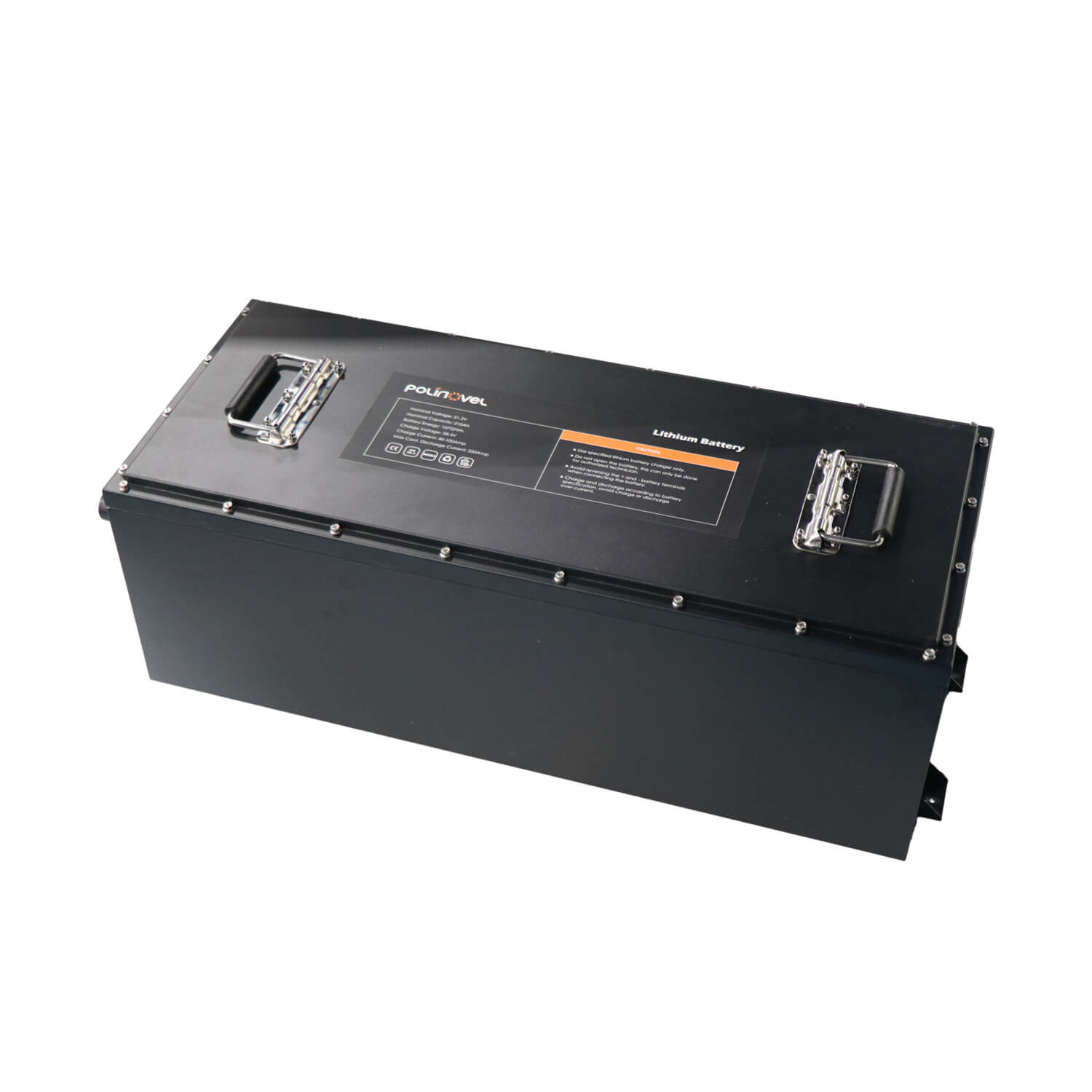
Weight differences between the chemistries are substantial and impact system design directly. A standard 100Ah AGM weighs roughly 60 to 70 lbs. A 100Ah lithium unit weighs 25 to 30 lbs. This weight reduction compounds rapidly in mobile applications. RVs, overland vehicles, and marine vessels gain better fuel efficiency and handling characteristics. Payload capacity increases significantly when you remove hundreds of pounds of lead from a storage compartment.
Space constraints also heavily favor lithium. High volumetric energy density allows users to pack double the usable power into the same physical footprint. You can fit twice the usable energy in standard Group 24, 27, or 31 battery boxes. For marine applications where engine room space is at a premium, swapping a massive 8D lead-acid bank for a compact lithium array frees up critical space for other equipment.
High-temperature performance favors lithium. It handles hot engine compartments, desert solar arrays, and enclosed storage boxes exceptionally well. Thermal runaway risks are virtually non-existent compared to NMC lithium-ion, making it safe for indoor installation. However, lithium carries a critical cold-weather limitation that installers must respect. Charging below freezing (32°F/0°C) causes irreversible lithium plating on the anode. This destroys the cells permanently in a single event.
Mitigation strategies exist for cold climates. Internal self-heating lithium models use incoming charge current to warm the cells above freezing before allowing the charge to enter the battery. AGM retains a natural advantage in extreme cold environments. It can safely accept a charge in sub-zero temperatures without internal damage, making it the preferred choice for unheated remote monitoring stations or winter backup systems where heating pads are impractical.
Upgrading a system requires a thorough audit of your existing power electronics. You need lithium-specific charge profiles on all charging sources. The system must deliver constant current and constant voltage, terminating the charge when the battery is full. It must never run a desulfation or equalization phase. High voltages during a lead-acid equalization cycle will trigger the lithium BMS to shut down the system to protect the cells, potentially leaving you without power and damaging sensitive 12V equipment due to voltage spikes.
Verify the solar charge controller has a custom or dedicated lithium setting.
Disable any automatic equalization features on legacy inverter/chargers.
Ensure the shore power converter can output a steady 14.4V to 14.6V for bulk charging.
Directly charging a lithium bank from a standard vehicle alternator carries severe risks. Because lithium has near-zero internal resistance, it will pull maximum current continuously from the alternator. At idle speeds, the alternator's internal cooling fan does not spin fast enough to dissipate the heat generated by this massive current draw. This overworks the alternator, causing the internal diodes to overheat and burn out rapidly.
You must install a DC-to-DC charger for RV, van, and marine engine integration. This device acts as a gateway, limiting the current draw to a safe level (e.g., 30 or 40 amps) and protecting your engine's electrical system. It also steps up the voltage to the exact profile required by the lithium BMS, ensuring a full 100% charge while driving.
The BMS is the operational brain of the lithium battery. It dictates safety, longevity, and performance limits. It handles over-voltage protection during charging and under-voltage protection during heavy discharge. It manages short circuit prevention, instantly severing the connection if a wrench drops across the terminals. Lead-acid lacks internal electronics entirely. It relies strictly on external fuses, breakers, and shunts for system protection. When designing a lithium system, you must ensure the continuous discharge rating of the BMS exceeds the maximum draw of your largest appliance, such as a 3000W inverter.
Choosing between a LiFePO4 battery vs AGM battery depends on your energy requirements, operating environment, charging system, and long-term investment goals. By comparing usable capacity, cycle life, charging efficiency, weight, safety, and system compatibility, you can select the battery technology that delivers the best performance, reliability, and overall value for your application.
About Polinovel
Polinovel is a professional LiFePO4 battery manufacturer specializing in lithium batteries for RVs, marine applications, solar energy storage, golf carts, forklifts, and industrial power systems. With advanced battery technology, intelligent BMS design, strict quality control, and flexible OEM/ODM capabilities, Polinovel delivers safe, high-performance, and long-lasting lithium battery solutions to customers around the world.
Choose LiFePO4 batteries for longer cycle life, lighter weight, faster charging, and higher usable capacity.
Consider AGM batteries for specific cold-weather or starter battery applications where lead-acid technology still offers practical advantages.
Verify charger compatibility, alternator protection, battery management systems, and installation requirements before upgrading.
Select batteries from manufacturers with proven engineering expertise, reliable product quality, and comprehensive technical support.
Before upgrading your energy storage system, evaluate your power consumption, charging sources, installation environment, temperature conditions, and long-term operating costs to choose the battery solution that best fits your application.
A: No. Drop-in replacement is a myth for most systems. You must check your charger profiles, wiring gauges, and alternator limits. Sending a lead-acid equalization charge to a lithium battery will trigger the BMS to shut down the system to prevent cell damage.
A: Yes. They require a charger with a specific lithium profile. This ensures they reach 100% state of charge safely. It also prevents the charger from initiating harmful desulfation or equalization phases meant for lead-acid maintenance.
A: You can safely discharge them in sub-zero temperatures. However, you are strictly prohibited from charging them below 32°F (0°C). Doing so causes permanent cell damage via lithium plating unless the battery features an internal heating element.
A: Yes, generally. Lead-acid batteries can off-gas explosive hydrogen if overcharged. Lithium iron phosphate is chemically stable and does not off-gas. The internal BMS also provides active protection against short circuits, overcharging, and thermal events.
A: Under normal deep-cycle use, AGM batteries typically last 3 to 5 years before capacity drops significantly. A quality lithium battery will last 10 or more years, providing thousands of cycles before noticeable capacity degradation occurs.
A: Lithium is vastly superior. It maintains a flat voltage curve throughout the night. AGM batteries experience voltage sag under continuous loads, which often causes the fridge compressor to shut off prematurely to protect the battery.